

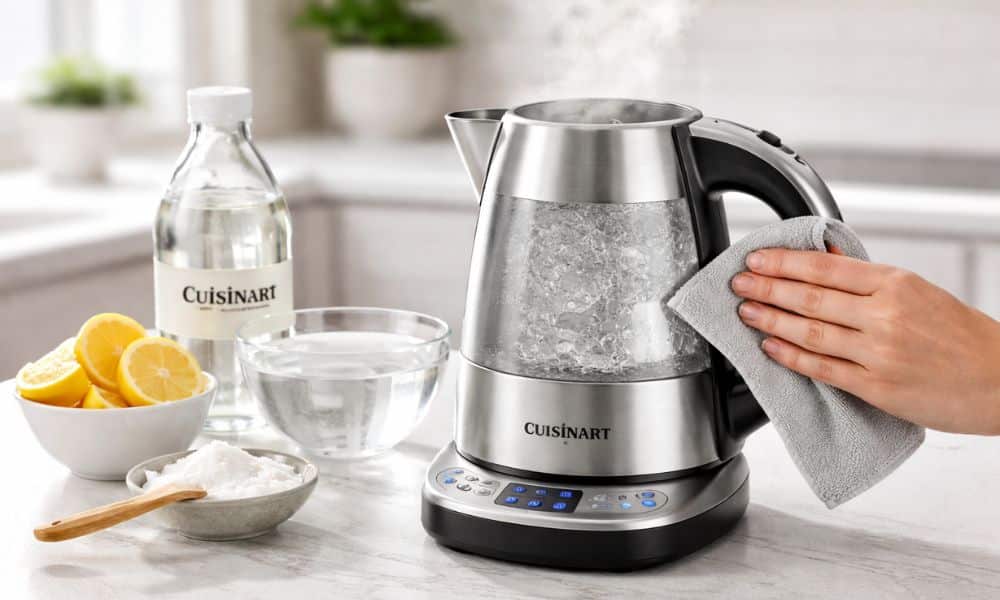
My tea tasted flat one morning, so I opened my kettle and saw white scale stuck inside. That pushed me to learn How To Clean Cuisinart Electric Tea Kettle the right way. My cpk 17 had buildup after only a few weeks, and it slowed the boil.
I tested simple methods on my tea kettle cordless and other kettle programmable models at home. In this guide, I’ll show you how to clean electric tea kettle units step by step, keep your wireless kettle fresh, and protect its shine for years.
Quick Answer – How To Clean Cuisinart Electric Tea Kettle
Cleaning your kettle is simple and takes about 20 minutes. Unplug it and let it cool fully. Fill it halfway with equal parts water and white vinegar. Bring it to a boil, then let the mix sit for 15 to 20 minutes.
Pour it out and rinse two or three times with clean water. This removes loose scale and clears any sharp smell. Wipe the outside with a damp cloth. Your kettle should look bright and feel smooth again.
Why Your Cuisinart Kettle Gets White Buildup
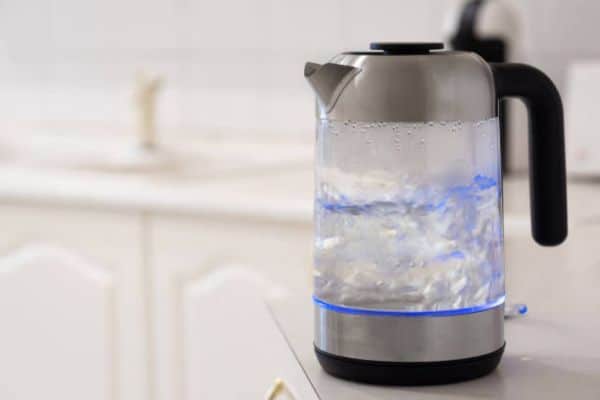
White buildup comes from hard water minerals like calcium. Heat turns those minerals into limescale. That crust sticks to the heating plate and walls. Over time, it slows boil speed and dulls the flavour.
In many parts of the U.S., water has high mineral levels. That means scale can form fast. I noticed buildup after just three weeks in my own kitchen. Even a strong, programmable kettle model like the CPK 17 showed signs early.
Many people search how to clean electric tea kettle units after they see flakes. The truth is simple. Scale is normal, and it needs routine care.
Tools You Need Before Cleaning
You only need a few basic items. White vinegar works best for most homes. Clean water helps rinse away loose scale. A soft sponge protects the steel surface.
A microfiber cloth keeps the outside streak-free. Lemon juice can help with a light odour. Avoid rough scrubbers. Hard pads scratch stainless steel and make future scale cling faster.
Step-by-Step – How To Clean Cuisinart Electric Tea Kettle Properly
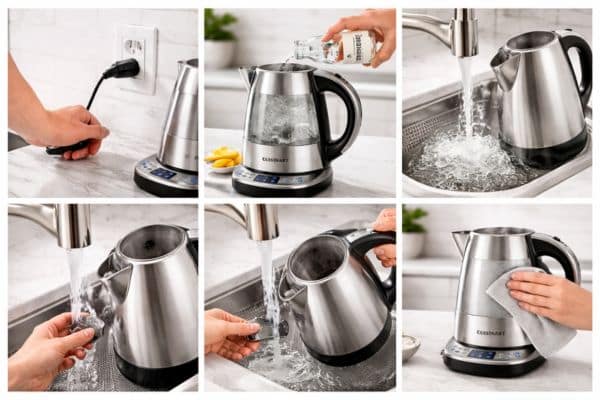
Step 1 – Unplug and Cool Down
Safety comes first. Always unplug the kettle before cleaning. Let it cool to room temperature. Heat and water do not mix well with power.
Step 2 – Descale Interior
Fill the kettle halfway with equal parts vinegar and water. This ratio breaks down mineral scale with ease. Bring it to a full boil, then let it rest inside.
For the CPK 17 or other kettle programmable models, use the normal boil setting. No special mode is needed. The acid gently loosens the white layer on the heating plate.
Step 3 – Rinse Two or Three Times
Dump the liquid into the sink. Rinse with fresh water at least twice. Boil plain water once more and discard it. This clears any sharp taste.
Step 4 – Clean the Filter and Spout
Open the lid and check the small mesh filter. Many tea kettle cordless designs have a removable filter. Rinse it under warm water and wipe gently.
Scale often hides near the spout. A soft cloth can reach tight areas. Clean parts mean smoother pours.
Step 5 – Wipe the Exterior
Use a damp microfiber cloth on the body. Keep water away from the wireless kettle base. Never submerge the base in water. The heating contacts must stay dry.
How To Clean Cuisinart CPK 17 Specifically
The CPK 17 uses a 1500-watt heating plate. It also has six temperature presets and a removable scale filter. These features make it powerful and precise.
Cleaning follows the same vinegar method. Pay extra care to the heating plate at the bottom. Wipe it gently after descaling. Avoid sharp tools near the sensor area.
Can You Put a Cuisinart Tea Kettle in the Dishwasher
No, it does not belong in a dishwasher. Electric parts sit inside the base and handle. Strong heat and water pressure can cause damage. Warranty issues may follow.
Hand cleaning is fast and safe. A few simple steps protect your investment. Looking for a safer option? Check out the best electric tea kettle without plastic for cleaner taste and peace of mind.
How Often Should You Clean Your Electric Tea Kettle
Cleaning frequency depends on water quality. Soft water homes can clean every two to three months. Hard water homes need monthly care. Heavy tea drinkers may clean every two to four weeks.
I do a quick rinse each week. I descale once a month. That routine keeps my wireless kettle running fast and quiet.
Common Cleaning Mistakes I Made
I once used a metal scrubber. It left tiny scratches that caught more scale. Also forgot to rinse well, and the tea tasted sharp.
Once the cordless base is placed near water. That was a close call. Another mistake was running the kettle dry, which stresses the heating plate. Gentle care always wins.
Vinegar vs Lemon vs Descaling Solution
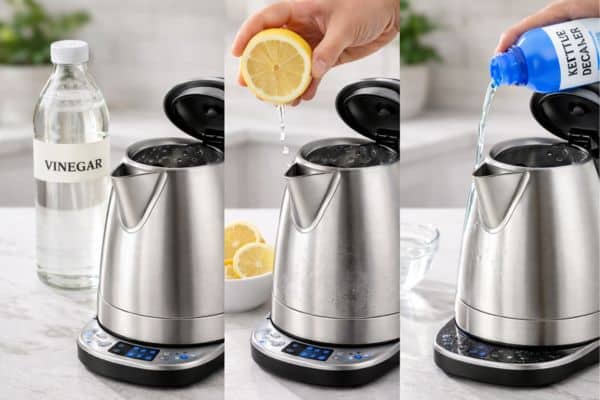
Vinegar is low cost and very effective. Lemon smells fresh, but works best for light buildup. Store descaling solutions are strong and fast, but cost more.
Studies show mild acids break calcium deposits safely. For most homes, vinegar gives the best balance of power and value.
How To Maintain a Tea Kettle Cordless Model Long Term
Empty the kettle after each use. Let the lid stay open so moisture can escape. Avoid filling past the max line. Use filtered water to reduce mineral load.
These small habits protect tea kettle cordless and kettle programmable models alike. Clean water means less scale and better taste.
FAQs
How do I remove heavy limescale
Use a stronger vinegar mix and let it sit longer. Repeat the boil and rest cycle once more. Thick scale may need two rounds. Gentle wiping after soaking helps loosen flakes.
Can I use baking soda instead of vinegar
Baking soda can clean odors but does not break hard scale well. Vinegar works better for mineral buildup. Use baking soda for light surface cleaning only.
Why does my kettle smell after cleaning
A sharp smell comes from leftover vinegar. Boil plain water once or twice and discard it. That clears any scent fast.
Is descaling safe for CPK 17
Yes, the vinegar method is safe for the CPK 17. It protects the heating plate and filter. Regular care improves boil speed and taste.
How do I clean the heating plate safely
Let the kettle cool fully. Use the vinegar soak to loosen scale. Wipe gently with a soft cloth. Never scrape the plate.
Final Thoughts
I treat my kettle like a daily partner. Weekly rinses keep it fresh. Monthly descaling keeps it strong. Boil time improved after regular care.
Energy use also felt more stable. A clean plate heats water faster. A simple filtered water pitcher can cut scale at the source. A mild descaling solution can help in areas with heavy mineralisation.
A clean kettle is like a clear window. It lets pure flavour shine through every cup.
