

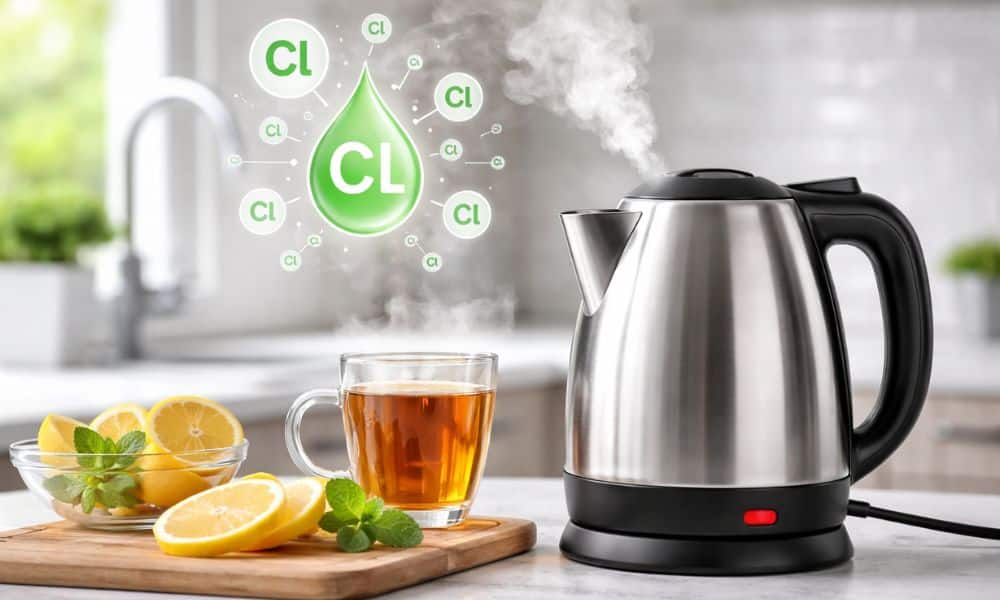
One day my tea smelled like a pool, and I had to ask myself, Does Boiling Water In Kettle Remove Chlorine, or am I just heating the same tap taste? The sharp scent surprised me.
Here is the simple truth. Boiling can remove most free chlorine, yet it does not remove chloramine. Let me explain how long to boil water to remove chlorine and the best way to remove chlorine from drinking water at home.
Does Boiling Water in a kettle remove chlorine?
Yes, boiling can remove most free chlorine, yet it does not remove chloramine. Time and open heat both matter.
Chlorine is a gas added to city water to kill harmful germs. It keeps drinking water safe across the United States. That sharp, pool-like smell comes from this gas. During boiling, the gas escapes into the air.
In-home testing, water boiled for one minute still carried a light odour. Water boiled uncovered for about fifteen minutes had far less smell. Longer exposure allowed more chlorine to evaporate. A brief kettle cycle reduced some odour, yet not all.
How Long to Boil Water to Remove Chlorine?
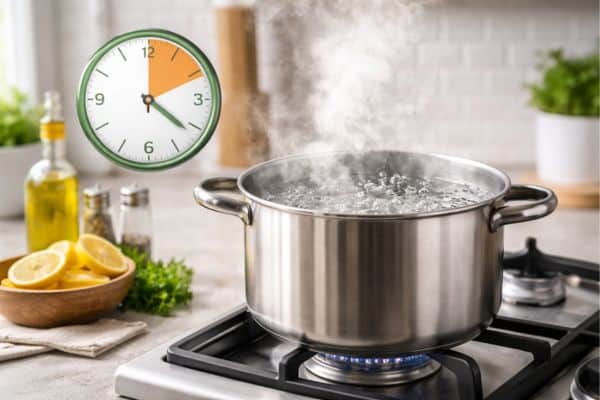
About 10 to 15 minutes of steady uncovered boiling removes most free chlorine.
Most electric kettles switch off soon after reaching a rolling boil. That short cycle limits evaporation time. In many cases, water boils for less than one minute.
A short boil may lower chlorine slightly, yet it rarely removes most of it. Extending heat on a stove after kettle boiling increases exposure. More steam and surface contact allow more gas to leave the water.
Does Letting Water Sit Overnight Work?
Letting water stand uncovered can reduce free chlorine, though it requires many hours.
Chlorine slowly escapes into the air through natural evaporation. A wide container improves results due to larger surface area. This method works only for free chlorine.
Chloramine does not evaporate easily. Standing water overnight will not remove it effectively. Patience helps with chlorine, yet not with chloramine.
Does Boiling Water Remove Chloramine?
Boiling does not effectively remove chloramine.
Chloramine is a compound made from chlorine and ammonia. Many cities use it because it stays stable in long pipe systems. Its stability makes it harder to remove through simple heating.
The U.S. Environmental Protection Agency explains that chloramine remains in water longer than chlorine. Heat alone does little to break it down. That explains why odor may remain even after extended boiling in some areas.
Water source plays a major role. In locations that use free chlorine, boiling reduces odor noticeably. In areas that rely on chloramine, boiling shows little change. The question does boiling water remove chloramine has a clear answer based on chemistry alone.
How to Remove Chlorine from Tap Water Naturally
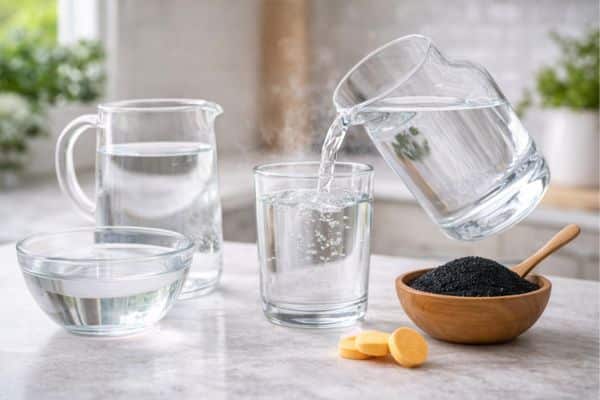
Several natural methods can reduce chlorine levels.
Letting water stand uncovered allows free chlorine to evaporate. Aeration, such as pouring water between containers, speeds up gas release. Both methods rely on exposure to air.
Vitamin C can neutralize chlorine through a simple chemical reaction. Small amounts convert chlorine into harmless compounds. Activated carbon remains one of the most reliable natural materials for chlorine removal.
Which Natural Method Works Best?
Carbon filtration offers the most consistent results for everyday use.
Boiling removes most free chlorine with enough time. Standing overnight works slowly and only for chlorine. Carbon filters remove chlorine efficiently and improve taste at the same time.
Reverse osmosis systems go further by removing many dissolved substances. They provide deeper purification, though at higher cost and maintenance needs.
Best Way to Remove Chlorine from Drinking Water
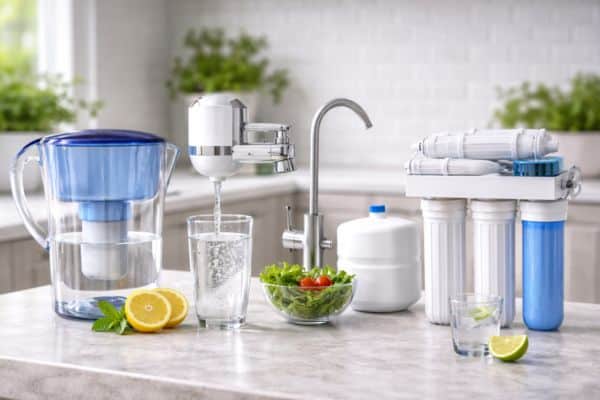
Carbon filtration systems provide a strong balance between cost, convenience, and performance.
Pitcher filters offer an affordable starting point. Faucet filters provide quicker access and higher flow. Under-sink systems support larger households with a steady supply.
Reverse osmosis systems remove a wide range of contaminants beyond chlorine. For most households, quality carbon filtration meets daily drinking and cooking needs without a complex setup.
Boiling Water vs Water Filter for Chlorine
Boiling reduces free chlorine, while filters remove chlorine more efficiently and handle chloramine in many cases.
Requires time and energy. It also fails to remove chloramine. Energy use increases over repeated cycles.
Water filters work at room temperature and provide immediate improvement in taste. Many carbon-based systems reduce both chlorine and some forms of chloramine. In terms of convenience and coverage, filtration offers broader benefits.
Best Kettle Setup for Clean Water and Taste
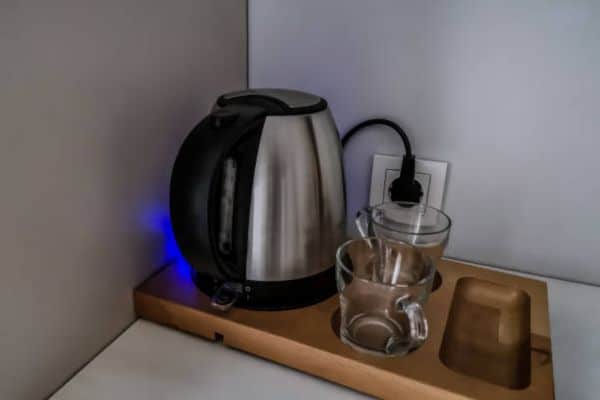
Many people focus on filtration, yet the tool you choose also matters. For a smooth tea taste and fewer unwanted flavours from your tap, pairing good water with a quality kettle makes a big difference. One option I tried and liked for everyday use is the best electric tea kettle without plastic because it heats water cleanly while avoiding extra materials that can affect taste. Using this kettle, along with proper boiling methods, helped reduce the chlorine aroma and keep my drinks tasting fresh.
Does Boiling Improve the Taste of Tap Water?
Boiling often improves taste by reducing free chlorine.
After longer boiling, water tends to lose its sharp chemical edge. Tea and coffee may taste smoother. The improvement links directly to reduced chlorine content.
Minerals remain unchanged through boiling. Hard water can still taste heavy or metallic. Taste improvement depends on the original water chemistry.
Safety Considerations When Boiling Water
Repeated reboiling can concentrate certain minerals over time.
Mineral buildup may increase scale inside the kettle. Limescale affects heating efficiency and flavor. Regular cleaning maintains better performance.
Descaling the kettle supports consistent results. Clean equipment supports clean taste and safe operation.
Conclusion
Boiling works for free chlorine, yet filtration offers broader protection.
Extended uncovered boiling reduces chlorine odor effectively. This method serves as a simple short-term option.
For areas using chloramine or for long-term daily use, filtration provides more reliable results. Clean taste, convenience, and broader removal make it a stronger overall solution.
FAQs
Does boiling water in kettle remove chlorine completely?
Does boiling water in kettle remove chlorine completely? Boiling removes most free chlorine after 10 to 15 minutes, but it does not remove chloramine from tap water.
How long to boil water to remove chlorine from tap water naturally?
How long to boil water to remove chlorine from tap water naturally? Boil water uncovered for about 10 to 15 minutes so the chlorine gas can escape into the air.
Does boiling water remove chloramine in drinking water?
Does boiling water remove chloramine in drinking water? No, boiling water does not remove chloramine because it is more stable than chlorine and does not evaporate easily.
What is the best way to remove chlorine from drinking water boiling water vs water filter for chlorine?
What is the best way to remove chlorine from drinking water boiling water vs water filter for chlorine? A carbon water filter removes chlorine better and works on chloramine, while boiling only removes free chlorine.
