

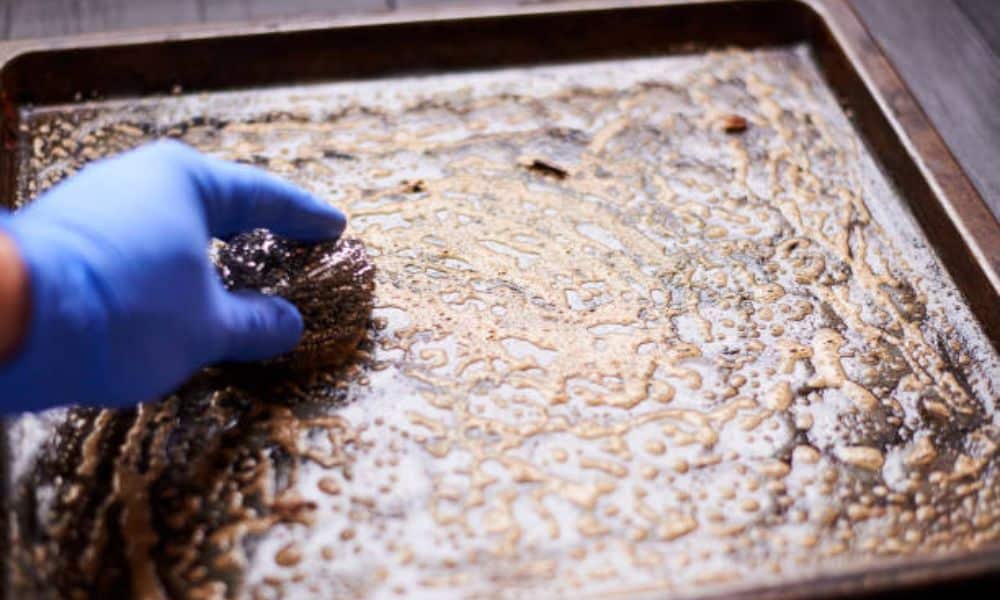
How to clean aluminum baking trays is a common question in many kitchens after grease, burnt food, and dark stains start covering the surface. Dirty trays can affect both appearance and cooking performance over time.
Simple methods using baking soda, vinegar, and hot water can make cleaning baking sheets much easier without damaging the aluminum. This guide explains safe ways to remove baked-on grease, restore shine, and keep baking pans clean for longer.
Why Aluminum Baking Trays Get Dirty So Quickly
Aluminum heats up very fast. That quick heat causes grease and food particles to burn onto the tray surface during cooking. Over time, thin grease layers turn into stubborn stains.
Roasted vegetables, cookies, pizza, and meats usually leave oily residue behind. High oven temperatures bake that oil directly into the metal. Many people notice dark patches after only a few uses.
Cleaning baking pans becomes harder once burnt grease builds in layers. Old stains may also create unpleasant smells during baking. That burnt odor spreads through the kitchen and affects fresh food.
Dishwashers can make things worse. Harsh dishwasher detergents sometimes discolor aluminum trays. The surface may turn dull or chalky after repeated dishwasher cycles.
Things Needed Before Cleaning Baking Sheets
Most cleaning jobs only require a few simple supplies. Common kitchen products usually remove grease safely without damaging aluminum.
Useful items include:
- Baking soda
- White vinegar
- Dish soap
- Hot water
- Lemon
- Soft sponge
- Microfiber cloth
Avoid steel wool and metal scrubbers. Rough tools scratch aluminum surfaces and make future cleaning harder. Deep scratches also trap grease more easily.
Strong oven cleaners should stay away from aluminum baking trays. Many harsh chemicals react badly with aluminum and may damage the finish.
How To Clean Aluminum Baking Trays Step By Step
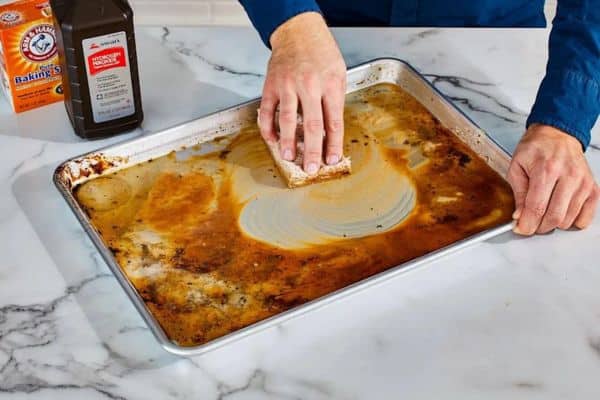
The easiest cleaning method starts with soaking. Fill the sink with hot water and dish soap. Let the tray soak for at least 30 minutes.
Hot water softens baked grease naturally. That simple step reduces scrubbing and protects the tray surface.
After soaking, sprinkle baking soda across greasy areas. Add small drops of water to create a thick paste. Spread the paste over stains and let it sit for 15 minutes.
Use a soft sponge to scrub gently in circular motions. Most grease loosens easily after the baking soda treatment.
For tougher stains, vinegar helps a lot. Pour white vinegar directly onto the baking soda paste. The fizzing reaction breaks down hardened grease and burnt residue.
This method works especially well for cleaning baking sheets with heavy buildup. Old cookie sheets often improve dramatically after one deep cleaning session.
Rinse the tray with warm water once the grease disappears. Dry immediately with a soft towel to prevent water spots.
How To Remove Baked On Grease From Pans
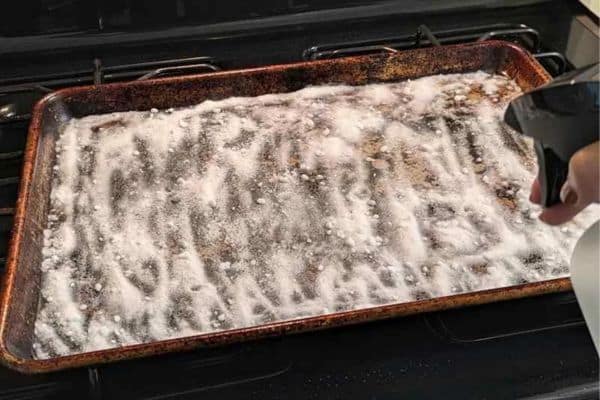
Some trays develop thick black grease that refuses to move. Those stubborn layers need stronger soaking methods.
One effective trick uses overnight baking soda treatment. Cover the tray with a heavy layer of baking soda paste before bed. Leave it untouched overnight.
The long soaking time softens grease deeply. Morning cleaning becomes much easier.
Another good method uses boiling water and vinegar. Place the tray in the sink carefully. Pour boiling water onto the greasy sections and add vinegar slowly.
The heat loosens hardened grease while vinegar breaks oily buildup apart. Many people use this method for cleaning baking pans that look ruined.
Dryer sheet soaking is another popular kitchen hack. Fill the tray with warm water and place one dryer sheet inside. Leave it for one hour.
The softening chemicals help loosen burnt food particles. Grease wipes away faster afterward. Some people dislike using dryer sheets because of fragrance residue, though.
How To Clean Cookie Sheets With Baked On Grease
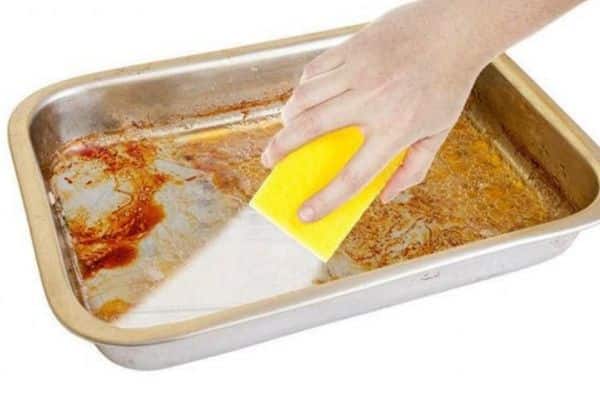
Cookie sheets often collect the worst grease stains because of repeated high-heat baking. Burnt sugar and butter leave sticky dark marks behind.
Flat cookie sheets also scratch more easily than deep baking pans. Gentle cleaning matters even more here.
A strong baking soda and hydrogen peroxide mixture works well for old cookie sheets. Sprinkle baking soda first, then pour a small amount of hydrogen peroxide over the surface.
The mixture forms a cleaning paste naturally. Let it sit for two hours before scrubbing gently.
Many heavily stained trays improve after this treatment. Dark patches may not disappear completely, but the surface usually looks much cleaner.
Regular maintenance helps prevent permanent grease stains. Quick cleaning after every use keeps buildup from hardening.
Natural Ways To Clean Baking Sheets Safely
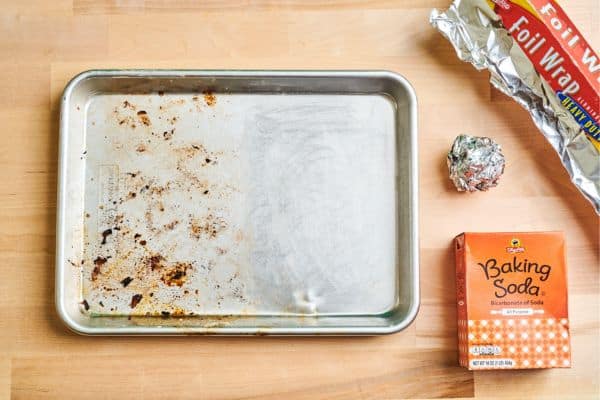
Natural cleaning methods remain the safest option for aluminum trays. Strong chemicals may weaken or discolor the metal over time.
Lemon cleaning works surprisingly well for light grease and odors. Cut a lemon in half and rub it across stained areas directly.
The acid helps loosen grime while leaving a fresh smell behind. Lemon also helps reduce mild discoloration.
Vinegar steam cleaning is another easy option. Place hot water and vinegar inside the tray and leave it for 20 minutes.
Steam softens grease naturally without harsh scrubbing. This trick works well for cleaning baking sheets after roasting greasy foods.
Baking soda remains the most trusted natural cleaner because it removes grease safely without damaging aluminum.
Common Mistakes While Cleaning Baking Pans
Many people accidentally damage trays while trying to clean them quickly. Small mistakes shorten the lifespan of baking sheets.
Bleach should never touch aluminum. Chemical reactions may stain or weaken the tray surface permanently.
Aggressive scrubbing also creates problems. Deep scratches trap oil and burnt food during future cooking sessions.
Leaving trays wet after washing causes oxidation spots. White marks sometimes appear after water dries naturally on aluminum surfaces.
Another mistake involves stacking dirty trays together. Grease transfers between pans and spreads stains even further.
Cleaning baking pans properly takes patience more than force. Gentle cleaning methods usually work best.
How To Keep Aluminum Baking Trays Clean Longer
Preventing grease buildup saves a lot of effort later. Small habits keep trays cleaner for much longer.
Parchment paper helps protect the surface during baking. Silicone baking mats also reduce direct grease contact.
Washing trays soon after cooking prevents grease from hardening. Fresh residue removes much easier than old burnt stains.
Proper storage matters too. Stacking trays roughly creates scratches that trap future grease.
Many home bakers now rotate trays regularly instead of overusing one favorite pan. That habit reduces heavy wear and keeps trays looking better.
Best Products For Cleaning Baking Sheets
Simple household products usually outperform expensive specialty cleaners. Baking soda remains one of the most effective options for greasy aluminum trays.
Microfiber cloths help dry trays without leaving lint behind. Soft non-scratch sponges also protect the aluminum finish.
Some people prefer aluminum-safe degreasers for extremely dirty pans. Choosing non-abrasive cleaners helps preserve the tray surface longer.
Natural cleaning methods remain the safest long-term choice for cleaning baking sheets and cookie trays.
FAQs
Can baking soda damage aluminum baking trays?
No. Baking soda is generally safe for aluminum and works well for removing grease and stains.
What removes burnt grease best?
Baking soda and vinegar together usually remove baked-on grease very effectively.
Can aluminum baking sheets go in the dishwasher?
Most aluminum trays can go in the dishwasher, but repeated washing may discolor the metal over time.
Why do baking trays turn brown?
Grease, oil, and high heat create brown oxidation stains during repeated cooking sessions.
How often should baking sheets be cleaned?
Light cleaning after every use helps prevent heavy grease buildup and permanent stains.
Final Thoughts
Learning how to clean aluminum baking trays properly makes baking tools last much longer. Simple household products often clean better than harsh chemicals.
Baking soda, vinegar, hot water, and gentle scrubbing remove most grease safely. Regular cleaning also prevents dark stains from becoming permanent.
Clean baking trays improve both kitchen appearance and cooking performance. A few simple habits keep baking sheets shiny, grease-free, and ready for the next batch of food.
