

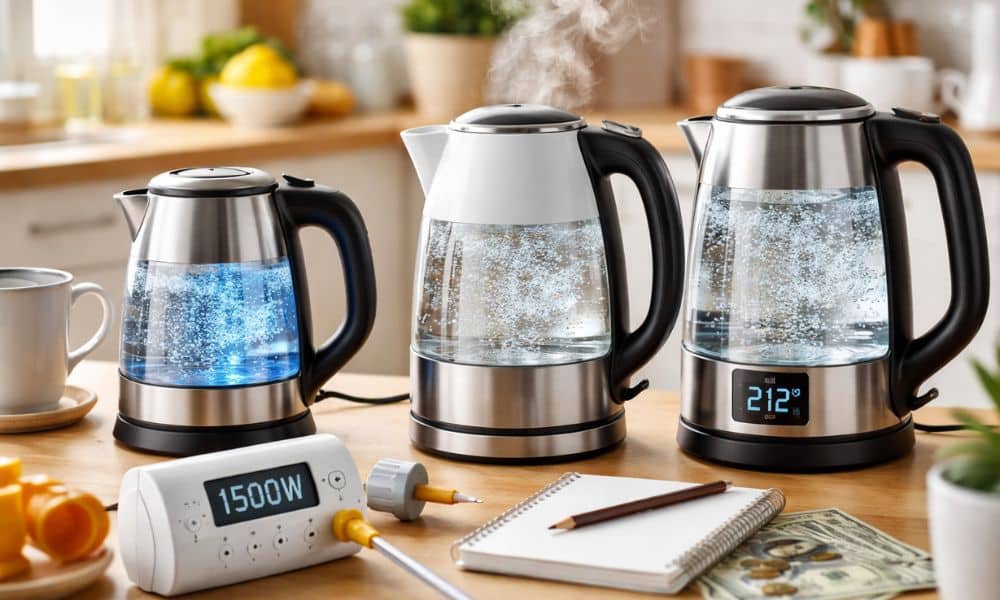
Ever wondered how many watts does an electric kettle use while waiting for water to boil? I asked the same thing one early morning, half awake and staring at my slow kettle.
The watts of a kettle affect speed, sound, and even your energy bill. I checked the power rating of my own kettle and compared it with a higher electric tea kettle wattage model. I tracked boil time and the energy use of electric kettle sessions for weeks.
Here’s what I learned about kettle wattage, real costs, and what actually matters for your kitchen.
Quick Answer – How Many Watts Does an Electric Kettle Use?
Most electric kettles in the USA use between 1200 and 1500 watts. That range covers the standard kettle wattage found in many homes. Compact models often run at 1000 to 1200 watts, while fast-boil versions can reach 1500 to 1800 watts. Higher wattage heats water faster, yet total cost stays low since boil time stays short.
In simple terms, typical kettle wattage sits in the 1200–1500 watt range for most kitchens. Smaller units use less power but take more time. High-speed kettles pull more watts yet finish the job quickly. That balance keeps the energy use of electric kettle sessions lower than many people expect.
Understanding Electric Kettle Wattage
What Does Wattage Actually Mean?
Wattage shows how much power a device draws to do its job. The power rating of a kettle tells you how fast it can turn electricity into heat. Think of watts like water flowing through a hose. More flow means faster heating.
In the US, most outlets provide 120 volts. Volts measure pressure, while watts measure total power used. Electric tea kettle wattage depends on both voltage and design. A higher number means stronger heating power, not higher cost by default.
Where to Find the Power Rating of a Kettle
You can find the power rating of a kettle on the bottom label. It also appears in the user manual and online product listings. Look for numbers like 1200W or 1500W. That number shows the watts of a kettle clearly.
I flipped my kettle over one morning and saw “1500W” printed near the cord. That tiny label answered a big question. It felt like finding the engine size under a car hood. Small detail, big meaning.
Typical Watts of a Kettle in the USA
| Kettle Type | Electric Tea Kettle Wattage | Boil Speed |
| Small 1L | 1000–1200W | Moderate |
| Standard 1.7L | 1500W | Fast |
| High-Speed | 1800W | Very Fast |
Most homes use a 1500W kettle. That level hits a sweet spot between speed and outlet safety. I tested a 1000W unit beside a 1500W model. The lower wattage kettle felt steady yet slow, like a calm walk. The 1500W version boiled water much faster and felt more practical for daily use.
Does Higher Kettle Wattage Mean Higher Electricity Bills?
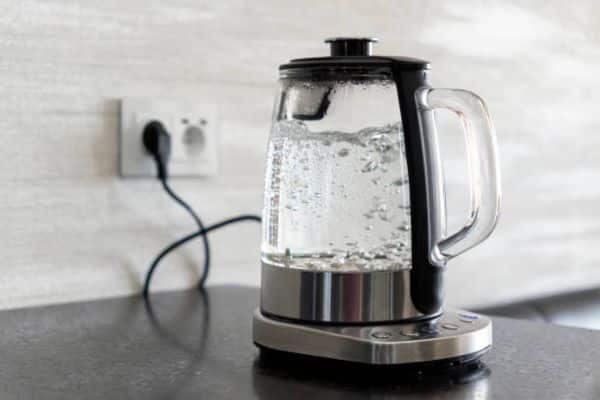
Higher kettle wattage does not always mean higher monthly cost. Energy use depends on power and time. A kettle runs for only a few minutes per boil. That short burst keeps total energy use low.
Calculating Energy Use of Electric Kettle
To estimate cost, use this formula: Watts × Time ÷ 1000 = kWh. A 1500W kettle used for 5 minutes equals 0.125 kWh. At an average US rate of about 15 cents per kWh, that boil costs under two cents. The energy use of electric kettle sessions stays small.
My Real Monthly Cost Test
I tracked daily tea boils for a month. My 1500W kettle ran about three times a day. The total cost stayed under a few dollars. That surprised me.
The key insight felt simple. Short run time keeps total cost low. Power looks high on paper, yet real use stays brief.
1000W vs 1500W vs 1800W – Which Is Better?
A 1000W kettle uses less power but takes more time. A 1500W model offers fast heating and fits most kitchen circuits. An 1800W kettle boils water very fast yet may draw close to outlet limits in some homes.
For small households, 1000W works fine. For families or heavy tea drinkers, 1500W feels ideal. Larger kitchens with strong circuits can handle 1800W. I prefer 1500W for daily balance between speed and safety.
Does Electric Tea Kettle Wattage Affect Performance?
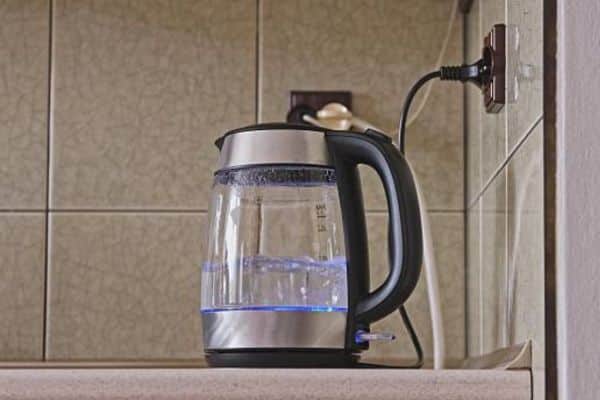
Yes, electric tea kettle wattage affects boil speed and sound. Higher power shortens heating time. That often means a louder hum for a brief moment. The process feels intense yet short.
I upgraded from a 1000W to a 1500W kettle last year. The change felt like switching from a bicycle to a scooter. Water reached a boil much faster. My morning routine felt smoother.
Longevity depends more on build quality than raw watts. Good design and proper cleaning matter more than numbers alone. New to kettles? Check out our complete guide on how to use electric kettle the right way for safe and fast boiling.
How to Choose the Right Kettle Wattage for Your Needs
For College Students or Small Apartments
A 1000–1200W kettle works well in small spaces. It draws less power and suits shared outlets. That level handles light daily use with ease.
For Large Families
A 1500W or higher model saves time. Fast boil speed helps during busy mornings. The higher kettle wattage keeps everyone moving.
For Office Use
In shared kitchens, 1500W offers reliable performance. It balances speed and circuit safety. That makes it a safe middle ground.
For RV or Travel Use
Lower wattage models fit better with limited power setups. Compact kettles around 1000W feel safer in tight systems.
Energy Efficiency Tips for Electric Kettles
Boil only the water you need. Less water means less energy used. Keep the lid closed to trap heat. That small step speeds boiling.
Descale your kettle often. Mineral buildup slows heating. I clean mine with vinegar once a month. That simple habit keeps performance steady.
Use a direct wall outlet. Avoid extension cords that can overheat. Small care steps protect both the kettle and the kitchen.
Electric Kettle vs Stove – Which Uses More Energy?
Electric kettles heat water directly at the source. That makes them very efficient. Stovetops lose heat to the air and pot sides. More heat escapes before water boils.
I tested both methods in my kitchen. The kettle reached boiling point faster. The stove took longer and felt less focused. For daily tea or coffee, the kettle wins in both speed and efficiency.
Common Mistakes That Increase Kettle Energy Use
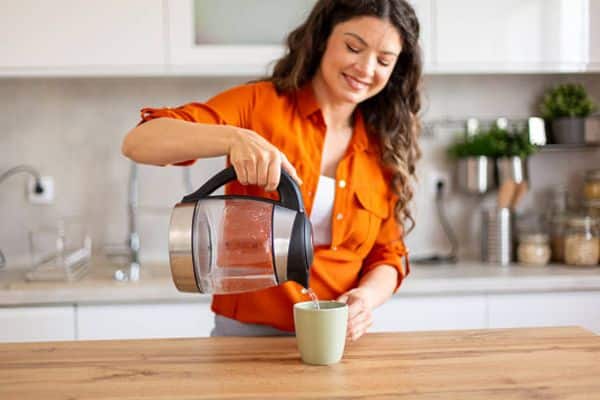
Overfilling wastes energy. Extra water needs extra heat. Leaving the kettle plugged in adds minor standby draw. Small habits add up.
Using extension cords can cause voltage drop. That slows heating. Poor maintenance also reduces efficiency. Clean equipment works best.
FAQs
How many watts does an electric kettle use per boil?
Most kettles use 1200 to 1500 watts during operation. Since boil time lasts only a few minutes, total energy per boil stays low. The watts of a kettle show peak power, not total monthly cost.
Is a 1500 watt kettle too much?
A 1500W kettle suits most US homes. It fits standard 120V outlets and boils water quickly. That level offers strong performance without extreme load.
Does higher wattage mean faster boiling?
Yes, higher wattage means faster heating. More power turns into heat at a quicker rate. Shorter boil time balances the total energy use.
How much electricity does a kettle use per month?
Daily use often costs only a few dollars per month. Energy use of electric kettle sessions stays low due to short run time. Even frequent tea drinkers see modest impact.
Are electric kettles energy efficient?
Yes, electric kettles are efficient. They heat water directly and waste little energy. That focused heating makes them one of the most efficient small kitchen appliances.
Final Thoughts
Kettle wattage sounds technical, yet it feels simple once understood. Most homes run perfectly with a 1500W model. The real cost stays small due to short use time.
Think of wattage like engine size in a small car. It affects speed, not daily expense in a dramatic way. Choose a model that fits your routine, keep it clean, and enjoy your tea without stress.
