

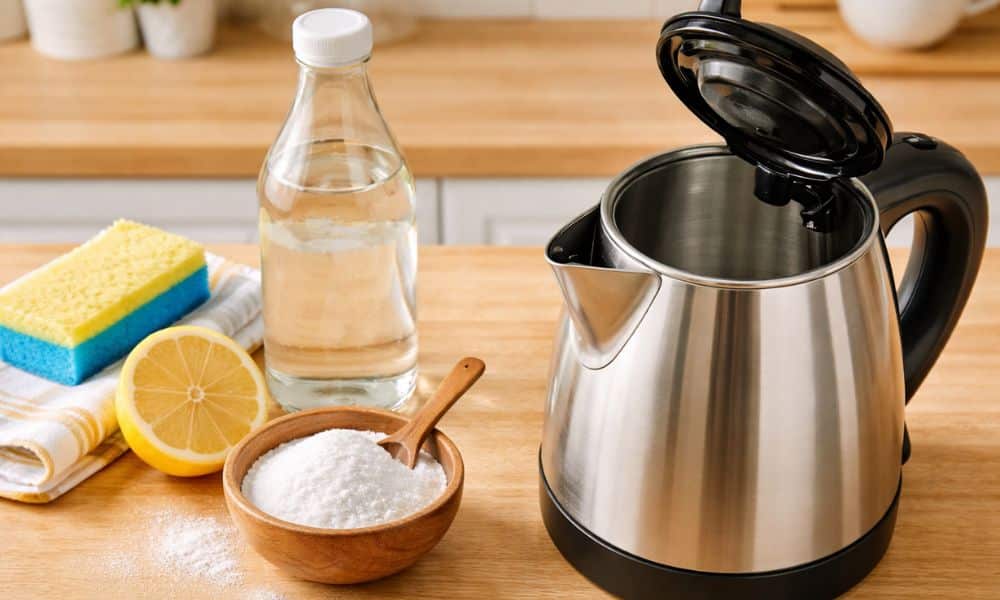
A white crust inside a kettle can surprise anyone. Hard water leaves minerals behind, and soon limescale begins to form. Learning how to remove calcium deposits from electric kettle helps keep water clean and boiling smooth.
Simple methods work well at home. The vinegar cleaning method for electric kettle breaks down scale, while lemon also helps clean limescale from electric kettle surfaces and remove mineral buildup in kettle areas naturally.
Why Calcium Deposits Form Inside Electric Kettles
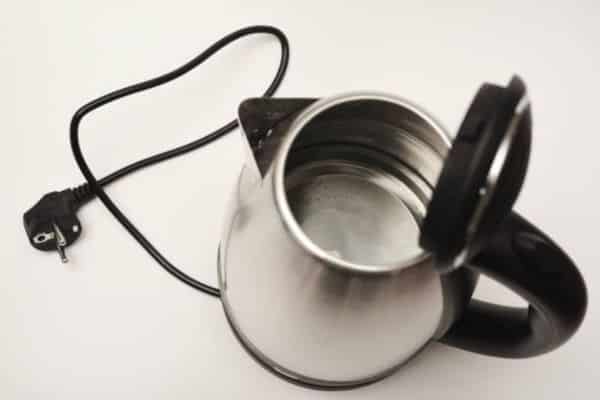
Hard water holds small bits of calcium and other minerals. Heat pulls these minerals out of the water. The minerals stay behind and stick to the metal base. Over time a rough white layer begins to grow.
This layer forms a little at a time. Each boil adds more minerals. The kettle still works, yet the buildup slowly grows thicker. Many people start to look for ways to remove mineral buildup in kettle parts once the layer becomes visible.
What Is Limescale And Why It Happens
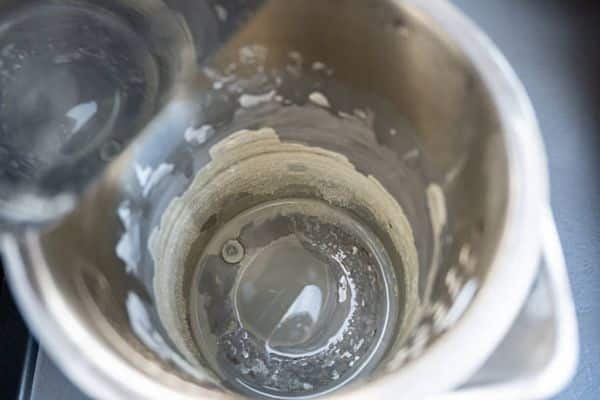
Limescale is a hard white crust. It forms from calcium left behind after water boils. The heat pulls minerals out of the water and leaves them on the kettle surface.
The heating plate collects the most buildup. That part stays hot during each boil. The hot metal attracts minerals and holds them in place.
Signs Your Kettle Has Mineral Buildup
A kettle often shows small signs before heavy buildup forms. The inside may look dusty or chalky. The water may also carry tiny white flakes.
Boiling may feel slower than before. Tea or coffee may taste dull. These signs show the need to remove mineral buildup in kettle surfaces.
Common signs include
• White chalky residue inside the kettle
• Flakes floating in boiled water
• Slower boiling time
• Strange taste in hot drinks
My Personal Experience With Calcium Deposits In My Kettle
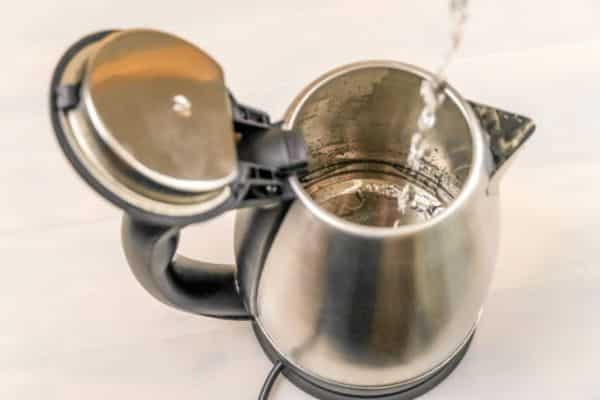
One day I looked inside my kettle and saw a pale white ring. At first it looked like dust. A closer look showed a rough mineral layer on the metal base.
Soon the kettle began to boil more slowly. My tea also lost some flavor. The water still heated, yet the taste felt flat.
A simple cleaning solved the problem. Vinegar and warm water removed the white crust with ease. Since then I clean the kettle often. Clean metal helps water boil fast and tea taste fresh.
Best Way To Descale Electric Kettle At Home
Mineral buildup looks tough, yet it breaks down with mild acid. Vinegar works well because it dissolves calcium. This makes it one of the best way to descale electric kettle surfaces at home.
The process needs only water and vinegar. The solution loosens the crust and lifts it from the metal base.
Vinegar Cleaning Method For Electric Kettle
The vinegar cleaning method for electric kettle care is simple and reliable. The acid in vinegar breaks down calcium scale.
Steps to follow
- Fill the kettle halfway with water
- Add the same amount of vinegar
- Boil the mixture once
- Let the liquid sit for 20 minutes
- Rinse the kettle well with clean water
The white crust softens and washes away.
How To Clean Limescale From Electric Kettle Without Vinegar
Some people dislike the smell of vinegar. Natural options also help break down scale.
Lemon Juice Method
Lemon holds natural acid. This acid breaks apart mineral deposits. A mix of water and lemon juice helps clean limescale from electric kettle surfaces.
The lemon scent also leaves the kettle fresh.
Baking Soda Method
Baking soda helps lift light buildup. Warm water mixed with baking soda softens the crust. A soft sponge can wipe away the loose layer.
This method also helps clean limescale from electric kettle surfaces safely. Regular descaling keeps your kettle clean. You can also read how to remove brown stains from electric kettle for more simple cleaning tips.
How To Remove Hard Water Stains From Kettle
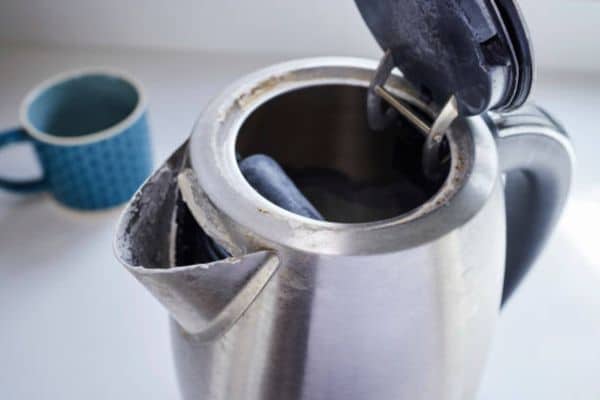
Hard water stains appear as dull marks on the metal base. These marks form after minerals dry on the surface.
Repeat the cleaning process for tough spots. A soft sponge helps lift loose scale. Avoid metal brushes because they scratch the kettle.
These steps help remove hard water stains from kettle surfaces and restore the shine.
How Often Should You Descale Your Electric Kettle
Cleaning needs depend on water type and daily use. Hard water causes faster buildup. Frequent boiling also adds more minerals.
A simple schedule helps keep the kettle clean.
Heavy use
Clean every two to four weeks
Light use
Clean every one to two months
This habit keeps scale from growing thick.
Common Mistakes When Cleaning Electric Kettles
Some cleaning methods cause harm to the kettle. Strong chemicals may damage the inside surface.
Metal tools may scratch the heating plate. Scratches trap more minerals later.
Poor rinsing can also leave cleaning liquid inside. Fresh water rinsing keeps the kettle safe for drinks.
Tips To Prevent Calcium Deposits In The Future
Small habits help slow mineral buildup. Empty the kettle after each use. Fresh water leaves fewer minerals behind.
Filtered water also reduces calcium content. This slows the growth of limescale.
Regular cleaning keeps the kettle smooth and bright.
FAQs
Is limescale in a kettle harmful?
Limescale mainly affects taste and boiling speed. Small amounts are not harmful. Clean kettles still improve drink flavor.
Can vinegar damage an electric kettle?
Diluted vinegar is safe for most kettles. It dissolves calcium without harming metal.
What removes limescale fastest?
Vinegar and citric acid remove scale quickly. Both dissolve mineral crust during boiling.
Can I use lemon instead of vinegar?
Yes. Lemon juice holds citric acid. It breaks down light mineral deposits.
How do I remove thick mineral buildup in kettle?
Heavy scale needs repeated cleaning. Each cycle removes more of the crust.
Final Thoughts
A kettle works hard in many kitchens. Over time minerals collect inside. This buildup is normal in areas with hard water.
Regular descaling keeps the kettle clean and fast. Drinks taste better and boil time improves.
The process takes only a few minutes. A simple habit keeps the kettle working well for years.
