

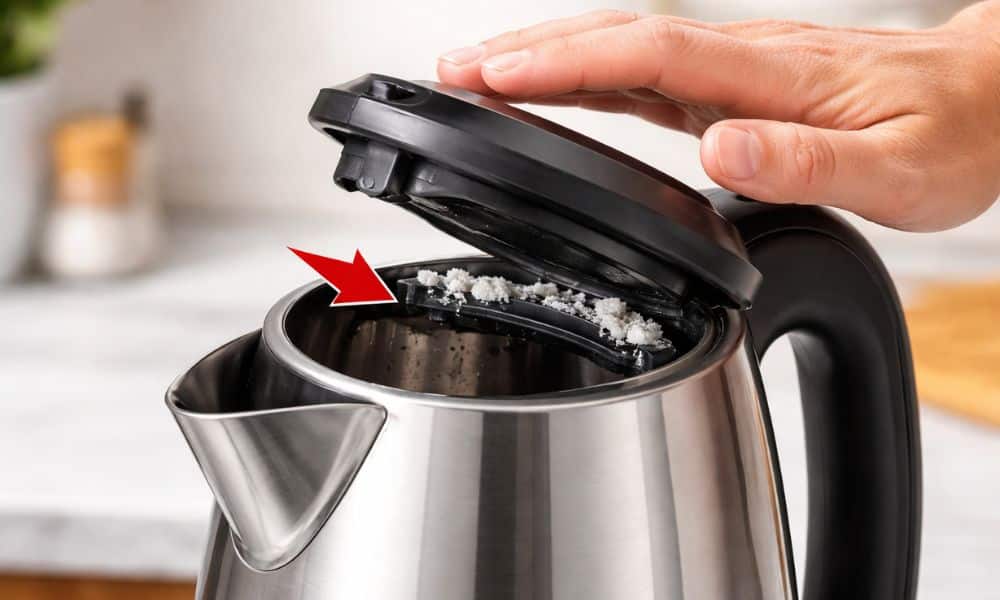
A small lid problem can ruin a calm tea moment. I faced this with my hamilton beach electric kettle lid won’t close, and at first I thought the kettle was broken. A quick check showed the real cause. A bit of mineral buildup sat around the hinge.
Most hamilton beach kettle lid stuck issues stay simple. Dirt, scale, or a kettle lid not closing properly often causes the trouble. In this guide, I share an easy electric kettle lid stuck fix and show how to fix kettle lid hinge problems so your kettle works smoothly again.
Why My Hamilton Beach Electric Kettle Lid Won’t Close
A kettle lid that refuses to close often feels frustrating at first. Many users assume the kettle has broken or the lid mechanism has failed. In reality, this issue is quite common and usually has a simple cause. Small things such as mineral deposits, dirt around the hinge, or a slight lid misalignment often stop the lid from locking into place.
One clear example comes from a simple kitchen experience. The first time a kettle lid refused to close, it looked like a serious mechanical problem. A closer look around the hinge revealed a thin layer of mineral buildup. After cleaning the hinge area, the lid closed smoothly again. Situations like this show that many lid problems come from normal use rather than damage.
Understanding the possible causes makes the problem easier to solve. Once the source becomes clear, most kettle lid issues can be fixed with a quick inspection and simple cleaning.
Common Reasons a Hamilton Beach Kettle Lid Gets Stuck
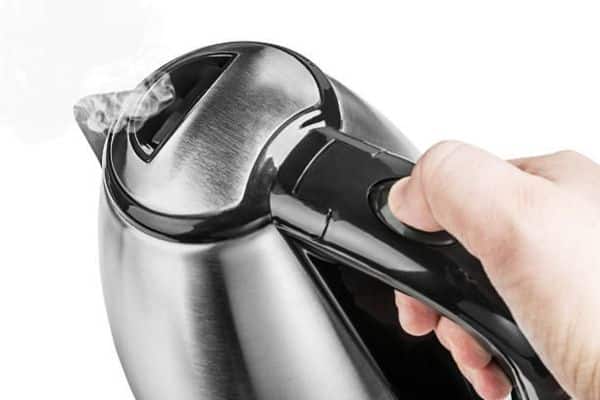
Several factors can prevent a kettle lid from closing properly. These causes usually develop over time as the kettle is used daily. Identifying the correct reason helps determine the best way to solve the issue.
Mineral or Limescale Buildup Around the Lid
Hard water often leaves behind mineral deposits inside electric kettles. These deposits slowly collect near the hinge and lid rim. Over time, the buildup creates a small barrier that stops the lid from closing fully.
Limescale can make the hinge stiff or block the lid from aligning with the locking point. Even a thin layer can affect the lid movement. Regular descaling usually removes the buildup and restores normal lid function.
Food Residue or Dirt in the Lid Mechanism
Small particles sometimes collect around the lid hinge during normal kitchen use. Tea splashes, steam condensation, or dust can settle into the hinge area. These particles may seem harmless, but can interfere with the lid movement.
Residue inside the hinge may cause resistance during closing. Cleaning the lid area often resolves this problem quickly.
Misaligned Lid Hinge
A slight hinge shift may cause the kettle lid not to close properly. This usually happens after repeated opening and closing over time.
A misaligned hinge prevents the lid from lining up with the locking groove. Even a minor shift can stop the lid from closing smoothly. Realigning the hinge position normally restores proper movement.
Worn or Loose Lid Spring
Some kettles rely on a small spring mechanism to help the lid open and close smoothly. Over time, this spring may loosen or lose tension.
A weakened spring often leads to a Hamilton Beach kettle lid problem, where the lid does not stay closed or fails to align correctly. In many cases, a simple adjustment can improve the lid movement.
Manufacturing Defect or Plastic Warping
Although uncommon, manufacturing defects can sometimes affect lid alignment. Heat exposure over long periods may also cause minor plastic warping around the lid or hinge.
Warped components may prevent the lid from sealing properly. In such cases, repairing the hinge or replacing the lid may become necessary.
How To Fix a Hamilton Beach Electric Kettle Lid That Won’t Close
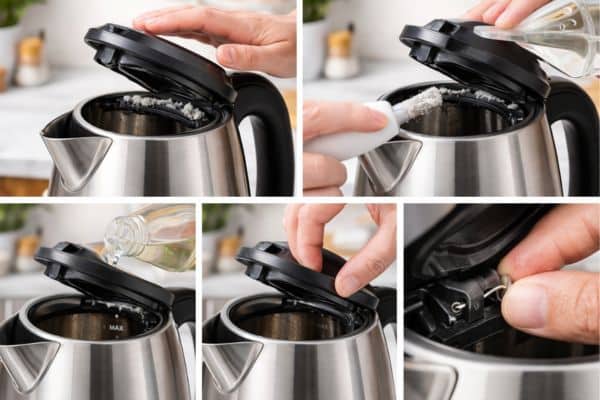
Fixing a kettle lid usually involves a few simple inspection and cleaning steps. Most problems appear around the hinge area, where dirt or mineral deposits build up over time.
Step 1 – Inspect the Lid Hinge
Begin by examining the hinge area carefully. Look for mineral buildup, residue, or visible obstruction around the hinge.
Check whether the lid appears slightly misaligned. Even small shifts in hinge position may prevent the lid from closing fully.
Step 2 – Clean the Lid and Hinge Area
Use a soft cloth or small brush to clean around the hinge. Remove any dust, residue, or buildup that may block the lid’s movement.
Warm water with mild dish soap works well for cleaning this area. After cleaning, dry the hinge area thoroughly before testing the lid again.
Step 3 – Remove Mineral Buildup
Mineral deposits can be removed using a vinegar solution. Fill the kettle with a mixture of water and white vinegar and allow it to sit for a short period.
After soaking, rinse the kettle thoroughly and wipe the hinge area. This simple cleaning process often acts as an effective fix for an electric kettle lid stuck.
Step 4 – Adjust the Lid Alignment
Check whether the lid sits evenly when closing. Gently reposition the hinge or lid frame to improve alignment.
A properly aligned lid should close smoothly without resistance.
Step 5 – Reset the Lid Spring
Inspect the small spring mechanism that controls lid movement. A loose or misaligned spring may prevent the lid from locking into place.
Adjusting the spring or repositioning the hinge usually restores smooth lid operation.
How To Fix a Loose or Broken Kettle Lid Hinge
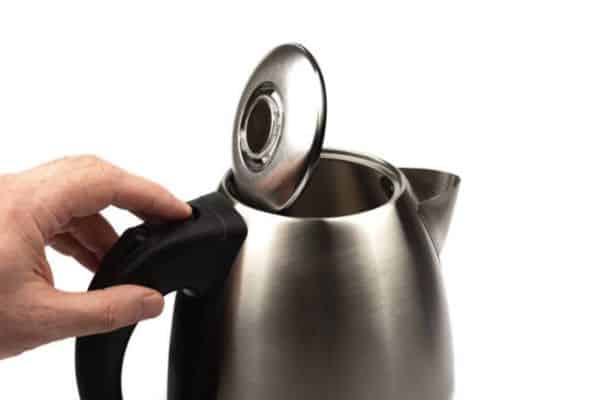
A loose hinge can cause the lid to move unevenly or fail to close completely. Learning how to fix kettle lid hinge problems helps restore normal kettle function.
In some cases, the hinge screws simply loosen during regular use. Tightening these screws can stabilize the lid and improve alignment.
Another approach involves gently repositioning the hinge structure. Slight adjustments may restore proper lid movement without replacing any parts.
However, severe hinge damage may require replacement of the lid assembly. Cracked hinges or broken hinge pins often cannot be repaired effectively.
When the Kettle Lid Cannot Be Repaired
Not every lid problem can be solved with cleaning or adjustment. Some situations indicate that repair is no longer possible.
Clear signs include cracked hinge components, broken lid springs, or a lid that no longer seals properly. These issues affect both safety and kettle performance.
A severely damaged hinge may lead to a persistent hamilton beach kettle lid stuck situation where the lid refuses to align at all. In these cases, replacing the lid or the kettle becomes the safest solution.
Tips to Prevent Kettle Lid Problems in the Future
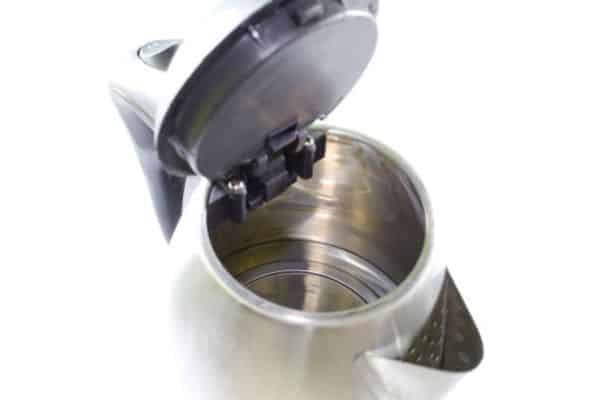
Preventive care helps reduce lid problems and extends the lifespan of the kettle.
Regular descaling removes mineral deposits before they become thick enough to affect the hinge. Hard water areas benefit from more frequent cleaning.
Avoid slamming the lid shut during use. Gentle closing protects the hinge and spring mechanism from unnecessary stress.
Wiping the hinge area regularly prevents dust and residue buildup. A quick weekly cleaning keeps the lid mechanism moving smoothly.
Using filtered water can also reduce mineral deposits inside the kettle. If you plan to replace an old kettle, you can read our guide on the best electric tea kettle without plastic to find safer stainless steel options for daily use.
My Personal Experience Fixing a Stuck Kettle Lid
A kettle lid problem often appears suddenly during normal kitchen use. One common experience involves opening the kettle for tea preparation and noticing that the lid refuses to close again.
Initial inspection often reveals nothing unusual at first glance. A closer look around the hinge area usually tells a different story.
Cleaning the hinge area with warm water and removing the mineral buildup often solves the issue quickly. After cleaning, the lid normally returns to smooth operation within minutes.
Experiences like this highlight how small maintenance steps can prevent larger appliance issues.
Final Thoughts
Electric kettle lid issues often appear more serious than they actually are. In many cases, cleaning and hinge inspection resolve the problem quickly.
A Hamilton Beach electric kettle lid won’t close issue usually results from mineral buildup, dirt accumulation, or minor hinge misalignment. Simple maintenance and regular cleaning often restore smooth lid function and keep the kettle working properly.
Frequently Asked Questions
Can mineral buildup stop a kettle lid from closing?
Yes. Hard water deposits can collect around the hinge and lid rim. These deposits block smooth lid movement and prevent proper closing.
Should I repair or replace a kettle with a broken lid?
Minor hinge issues can often be repaired through cleaning or adjustment. However, cracked hinges or broken springs usually require replacement.
Is it safe to use a kettle if the lid does not close properly?
Using a kettle with an open lid can cause heat loss and steam leakage. Repairing or replacing the lid helps maintain safe operation.
