

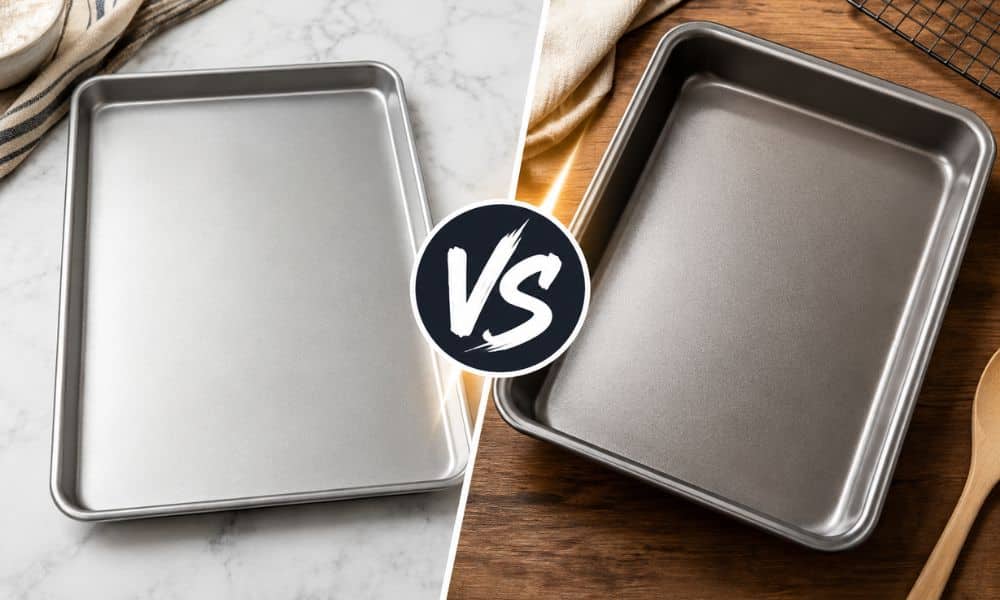
Baking sheet vs baking tray is a common comparison for home bakers trying to choose the right tool for their kitchen. At first glance, they look very similar. However, after using both for several years, some important differences become clear.
Many people assume a baking sheet and a baking tray are the same thing. That assumption often leads to uneven baking, messy cleanup, or choosing the wrong pan for a recipe. After testing both with cookies, roasted vegetables, chicken wings, and frozen foods, each option showed clear strengths and weaknesses.
The short answer is simple. A baking sheet is usually better for cookies, pastries, and foods that benefit from airflow. A baking tray is more versatile because its raised edges help contain oils, juices, and sauces. The better choice depends on what is being cooked most often.
Baking Sheet Review
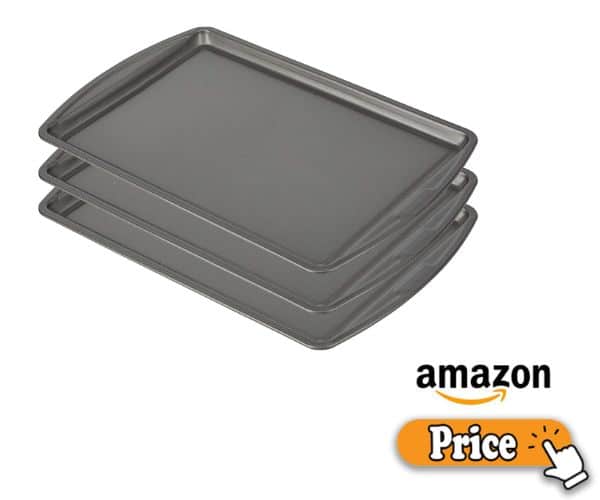
A baking sheet was originally purchased for baking cookies and homemade pastries. The flat design immediately stood out because it allowed easy sliding of cookies onto cooling racks.
Several batches of chocolate chip cookies were tested first. The results were excellent. Heat spread evenly across the surface, and cookies browned consistently from edge to center. The open sides also allowed better air circulation around baked goods.
Roasted vegetables were tested next. Potatoes, carrots, and broccoli cooked evenly and developed a nice crisp texture. The flat design helped moisture escape instead of collecting around the food.
One drawback became obvious when cooking foods with grease or liquid. Chicken wings released fat during cooking, and some grease occasionally dripped over the edges. This created extra cleanup inside the oven.
Cleaning was generally easy. Most food residue came off with warm water and dish soap. Using parchment paper made cleanup even simpler.
Pros And Cons Of A Baking Sheet
| Pros | Cons |
| Excellent for cookies | Limited edge protection |
| Even heat distribution | Not ideal for foods with liquids |
| Easy to handle | Can allow grease spills |
| Quick cleanup | Less versatile for roasting |
| Great airflow | May warp if low quality |
Overall Opinion On Baking Sheets
A baking sheet performs exceptionally well for cookies, pastries, biscuits, and roasted vegetables. For anyone who bakes frequently, it is one of the most useful pieces of bakeware in the kitchen. The only limitation is handling foods that release a lot of juices or oil.
Baking Tray Review
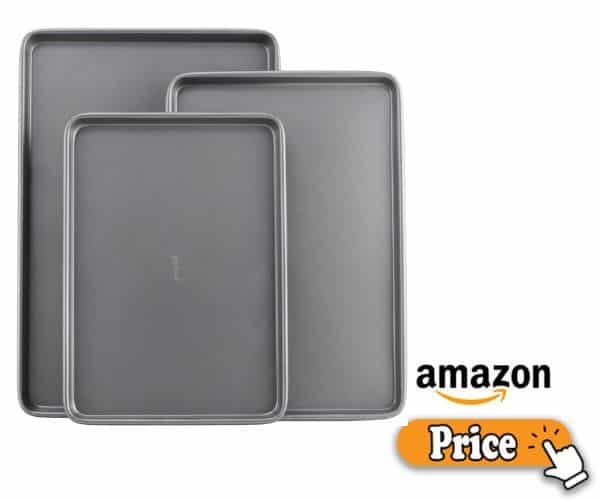
A baking tray was purchased later to handle larger meals and foods that produced grease during cooking. The raised edges immediately made it feel more secure.
The first test involved roasting chicken thighs and vegetables together. Unlike the baking sheet, the tray easily contained all cooking juices. Nothing spilled into the oven.
Frozen foods such as pizza rolls, chicken nuggets, and fish sticks also cooked very well. The raised sides helped keep food contained when moving the tray in and out of the oven.
Cookies baked nicely on the tray as well, although they did not brown quite as evenly as they did on the baking sheet. The deeper sides slightly reduced airflow around the food.
The baking tray proved especially useful for roasting vegetables with olive oil and seasoning. Any excess oil stayed inside the tray rather than running over the sides.
Cleaning required slightly more effort because grease sometimes collected in the corners. However, soaking the tray for a few minutes usually solved the problem.
Pros And Cons Of A Baking Tray
| Pros | Cons |
| More versatile | Slightly heavier |
| Contains grease and juices | Corners require extra cleaning |
| Great for roasting | Less airflow than a baking sheet |
| Safer for liquid-based foods | Cookies may brown less evenly |
| Good for family meals | Takes more storage space |
Overall Opinion On Baking Trays
A baking tray is the better all-purpose option for many households. It handles a wider range of recipes and reduces the risk of spills. While it may not outperform a baking sheet for cookies, it offers greater versatility overall.
Detailed Baking Sheet Vs Baking Tray Comparison
Heating Performance
Both options provide good heat distribution when made from quality materials. However, a baking sheet often allows slightly better airflow, helping foods crisp faster.
| Feature | Baking Sheet | Baking Tray |
| Airflow | Excellent | Good |
| Crisping Ability | Excellent | Very Good |
| Heat Distribution | Very Good | Very Good |
| Cookie Performance | Excellent | Good |
| Roasting Performance | Good | Excellent |
Best Foods To Cook
Different recipes benefit from different designs.
| Food Type | Baking Sheet | Baking Tray |
| Cookies | Excellent | Good |
| Pastries | Excellent | Good |
| Roasted Vegetables | Excellent | Excellent |
| Chicken Wings | Good | Excellent |
| Frozen Foods | Very Good | Excellent |
| Sheet Pan Meals | Good | Excellent |
Durability And Strength
Durability often depends on the material and construction quality. Both baking sheets and baking trays can last for years when properly maintained.
A heavy-duty baking sheet is resistant to warping and works well for frequent baking. However, some thinner models may bend when exposed to high oven temperatures.
Baking trays are often slightly thicker and more rigid because of their raised edges. This added structure can improve long-term durability.
| Feature | Baking Sheet | Baking Tray |
| Warping Resistance | Good | Very Good |
| Structural Strength | Good | Excellent |
| Lifespan | Long | Long |
| Heavy-Duty Use | Very Good | Excellent |
| Daily Cooking | Excellent | Excellent |
Cleaning And Maintenance
Cleaning is an important factor when choosing bakeware. Both options are relatively easy to maintain, but there are some differences.
A baking sheet is usually easier to wash because of its flat surface. Food particles have fewer places to get trapped.
A baking tray can collect grease and residue in the corners. This is not a major issue, but it may require a little extra scrubbing.
Using parchment paper or silicone baking mats can make cleanup easier for both options.
| Feature | Baking Sheet | Baking Tray |
| Daily Cleaning | Excellent | Very Good |
| Corner Cleaning | Excellent | Good |
| Dishwasher Friendly | Depends On Model | Depends On Model |
| Grease Management | Good | Excellent |
| Maintenance Effort | Low | Low To Moderate |
Weight And Ease Of Handling
Weight matters when moving hot cookware in and out of the oven.
A baking sheet is generally lighter and easier to handle. The lower weight makes it convenient for frequent baking sessions.
A baking tray is usually heavier because of its deeper design and reinforced structure. While still manageable, it may feel bulkier when carrying larger meals.
| Feature | Baking Sheet | Baking Tray |
| Weight | Light | Moderate |
| Storage Ease | Excellent | Good |
| Handling Comfort | Excellent | Very Good |
| Moving Hot Food | Good | Excellent |
| Large Meal Capacity | Good | Excellent |
Which One Is Better For Beginners?
For someone new to baking, the right choice depends on cooking habits.
A baking sheet is ideal for beginners who mainly bake cookies, biscuits, pastries, and simple snacks. It is lightweight, easy to clean, and performs exceptionally well for baked goods.
A baking tray is better for people who want one versatile pan that can handle roasting, baking, reheating, and sheet pan meals.
If only one piece of bakeware can be purchased initially, a baking tray often provides more flexibility.
| Feature | Baking Sheet | Baking Tray |
| Beginner Friendly | Excellent | Excellent |
| Versatility | Good | Excellent |
| Cookie Baking | Excellent | Good |
| Roasting Meals | Good | Excellent |
| One-Pan Solution | Good | Excellent |
Baking Sheet Vs Cookie Sheet
Many people use these terms interchangeably, but there is a small difference.
A cookie sheet usually has one or two completely open sides. This design allows cookies to slide off easily and promotes airflow.
A baking sheet normally has a small rim around the edges. This rim helps prevent grease or crumbs from falling into the oven.
For most home bakers, the performance difference is minor. Both work very well for cookies and baked treats.
Sheet Pan Vs Baking Tray
Another common comparison is sheet pan vs baking tray.
A sheet pan is generally a heavy-duty version of a baking sheet. It often has shallow rims and is designed for commercial or frequent use.
A baking tray usually has deeper sides and is intended for a wider range of cooking tasks.
Sheet pans excel at roasting vegetables and baking large batches of cookies. Baking trays offer more protection against spills and work better for foods that release juices.
Frequently Asked Questions
Is a baking sheet the same as a baking tray?
No. A baking sheet is usually flatter with lower edges, while a baking tray has raised sides that help contain grease and liquids.
Which is better for cookies?
A baking sheet is generally better for cookies because it promotes airflow and more even browning.
Can a baking tray replace a baking sheet?
Yes. A baking tray can handle most tasks performed by a baking sheet, although cookies may not bake quite as evenly.
What is a baking sheet used for?
A baking sheet is commonly used for cookies, pastries, biscuits, roasted vegetables, and other foods that benefit from direct heat and airflow.
Which lasts longer?
Both can last many years when made from quality materials. Heavy-duty baking trays may have a slight advantage because of their stronger structure.
Final Verdict
The baking sheet vs baking tray debate does not have one perfect winner because both serve different purposes.
A baking sheet is the better choice for cookies, pastries, biscuits, and foods that benefit from maximum airflow. It is lightweight, easy to clean, and produces excellent baking results.
A baking tray is the more versatile option. It handles roasting, sheet pan meals, frozen foods, and recipes that produce grease or juices. The raised edges provide extra security and reduce the risk of spills.
After using both regularly, the baking sheet remains the preferred choice for baking cookies and pastries. However, if only one pan could stay in the kitchen, the baking tray would likely be selected because it can handle a much wider range of cooking tasks.
For most households, owning both is the ideal solution. Together, they cover nearly every baking and roasting need in the kitchen.
