

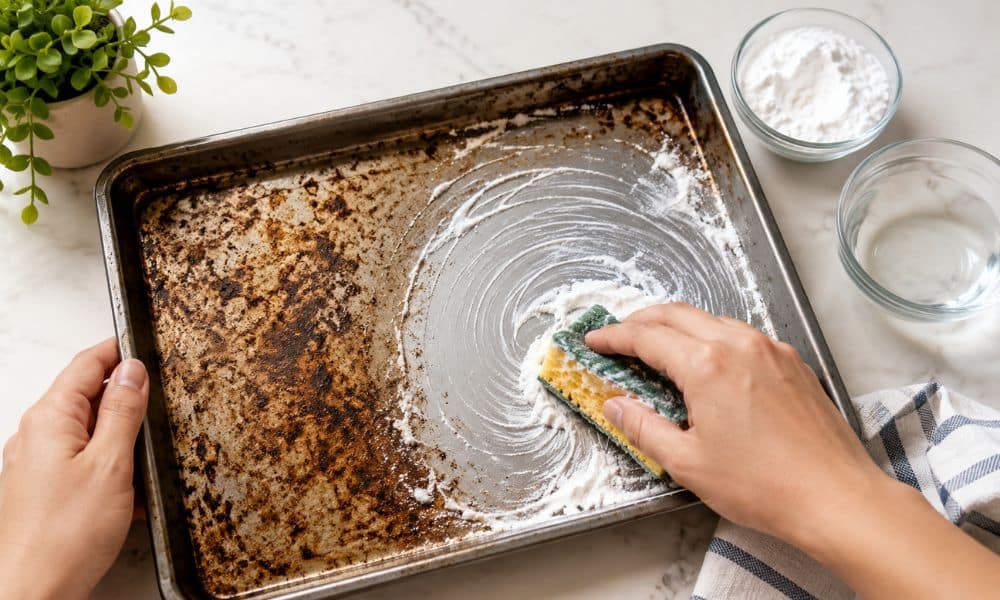
Baking trays can turn greasy, stained, and burnt after regular cooking. Many people struggle to remove baked-on grease without damaging the tray surface. Learning how to clean a baking tray with baking soda is one of the easiest and safest ways to restore old trays at home. Baking soda helps break down grease, loosen burnt food, and remove stains without harsh chemicals.
Cleaning a baking tray with baking soda also saves money because there is no need to replace stained trays often. The method works well on aluminum, stainless steel, and many non-stick baking trays. With a few simple kitchen items, baking trays can look cleaner and last much longer.
Why Baking Soda Works So Well For Baking Trays
Baking soda is mildly abrasive, so it scrubs away grease without scratching most tray surfaces. It also reacts with grease and burnt food to loosen stubborn residue. This makes cleaning easier with less scrubbing effort.
Another reason baking soda works well is that it removes odors from old trays. Burnt oil can leave a bad smell over time. Baking soda absorbs those odors while helping lift dark stains from the metal surface.
Many store-bought cleaners contain strong chemicals that can damage baking trays or leave residue behind. Baking soda is a safer option for kitchens because it is simple, affordable, and commonly available in most homes.
Things Needed Before Cleaning The Baking Tray
Before starting the cleaning process, gather a few basic items from the kitchen. Most of these are already available at home.
A good cleaning setup usually includes baking soda, warm water, dish soap, a sponge, and a soft scrub brush. White vinegar can also help remove heavy grease and burnt stains. Paper towels or microfiber cloths help dry the tray afterward.
Avoid using steel wool or metal scrapers on non-stick trays. These tools can scratch the coating and reduce the tray lifespan. A soft sponge works better for gentle cleaning.
How To Clean A Baking Tray With Baking Soda Step By Step
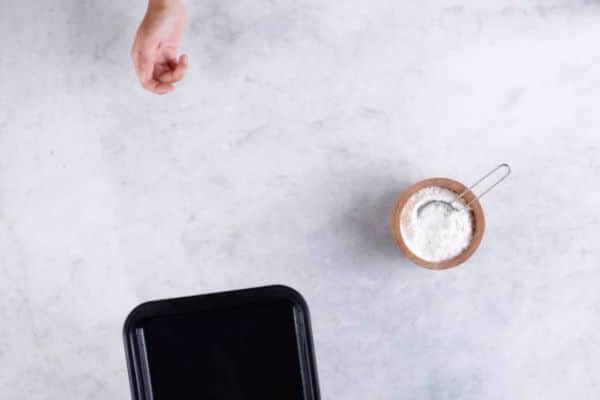
Cleaning a baking tray with baking soda becomes simple with the right method. Following the steps carefully helps remove grease faster and keeps the tray in better condition.
Remove Loose Food And Grease
Start by removing crumbs, loose burnt food, and excess grease from the baking tray. Use paper towels or a soft scraper to wipe away surface debris.
Rinsing the tray with warm water helps soften stuck grease before adding baking soda. This first step makes the deep cleaning process much easier later.
Make A Baking Soda Paste
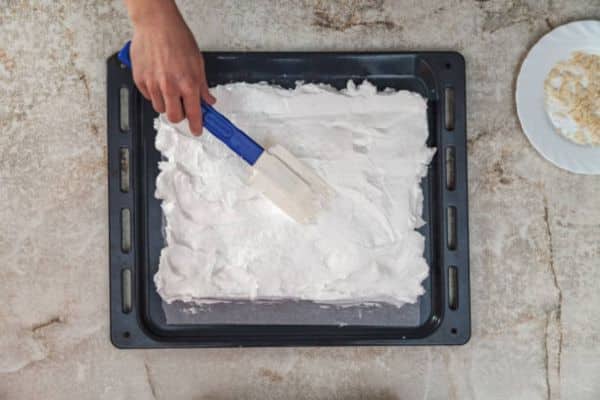
Mix baking soda with a small amount of water until a thick paste forms. The paste should spread easily without becoming too watery.
Cover the stained or greasy parts of the tray with the baking soda paste. Spread it evenly across burnt areas for better results. Thick layers work well for stubborn stains.
Let The Paste Sit
Leave the baking soda paste on the tray for at least 30 minutes. For heavily burnt trays, leaving it overnight often works better.
The baking soda slowly loosens grease and burnt food during this time. This reduces the amount of scrubbing needed later and helps protect the tray surface.
Scrub The Tray Gently
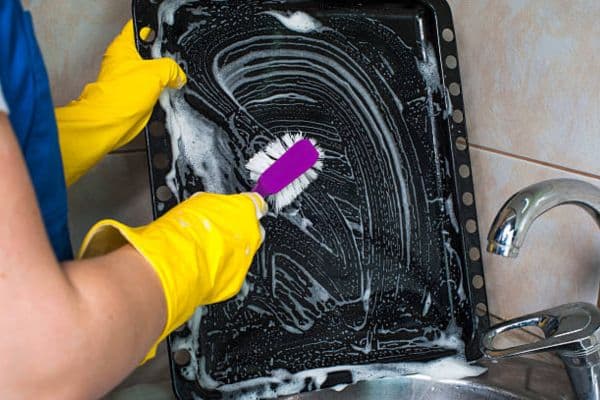
Use a soft sponge or brush to scrub the tray in circular motions. Focus on dark stains and burnt corners where grease builds up most.
Most stains should start lifting after a few minutes of gentle scrubbing. Avoid aggressive scrubbing because it can scratch delicate tray coatings.
Rinse And Wash With Soap
Rinse the tray with warm water to remove the baking soda residue. Then wash the tray with dish soap to remove leftover grease.
Dry the baking tray completely before storing it. Moisture left on metal trays can sometimes cause discoloration or rust over time.
Using Baking Soda And Vinegar Together
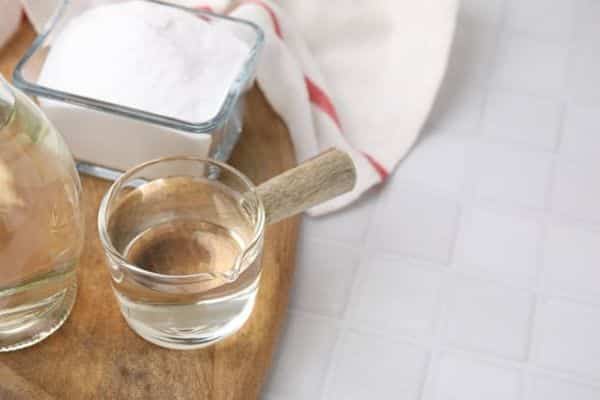
Baking soda and vinegar create a bubbling reaction that helps loosen burnt grease quickly. This method works especially well for trays with thick black stains.
Sprinkle baking soda across the tray first. Then pour a small amount of white vinegar over the surface. The fizzing reaction starts immediately and helps break down grime.
Let the mixture sit for 20 to 30 minutes before scrubbing gently. After cleaning, rinse thoroughly with warm water and soap. Many old stains become much lighter after one treatment.
How To Clean Burnt Baking Trays Naturally
Burnt baking trays often develop dark carbon stains that normal dish soap cannot remove. Baking soda offers a natural way to handle these stubborn marks safely.
For deep stains, cover the tray with baking soda and add hot water. Let the tray soak for several hours. The hot water softens the burnt residue while the baking soda loosens grease.
Some people also add lemon juice for extra stain removal power. Lemon helps cut grease naturally while leaving a fresher smell on the tray surface.
Very old stains may need two or three cleaning sessions before the tray looks fully restored. Patience usually gives better results than harsh scrubbing.
Best Way To Clean Non-Stick Baking Trays
Non-stick baking trays need extra care because rough scrubbing can damage the coating. Baking soda works well because it cleans gently compared to strong chemical cleaners.
Use only a soft sponge or microfiber cloth on non-stick trays. Avoid metal brushes and abrasive pads completely. Even small scratches can affect how the tray performs during baking.
Warm water and baking soda paste are usually enough for regular cleaning. For tougher grease, soaking the tray first often helps remove stains safely.
Proper cleaning also helps food release better during cooking. Damaged non-stick coatings can cause sticking and uneven baking later.
You can also learn more about How To Clean Non Stick Baking Trays for extra tray care tips.
Common Mistakes To Avoid While Cleaning Baking Trays
Many baking trays get damaged because of harsh cleaning habits. Avoiding a few common mistakes helps trays last much longer.
One major mistake is using bleach or strong oven cleaners directly on baking trays. These chemicals can discolor the metal and leave residue behind.
Another mistake is scrubbing too hard with steel wool. Deep scratches make trays harder to clean in the future because grease sticks inside the rough surface.
Some people also store trays while still damp. This can lead to rust spots on certain metal trays. Always dry trays completely before putting them away.
How Often Should Baking Trays Be Cleaned
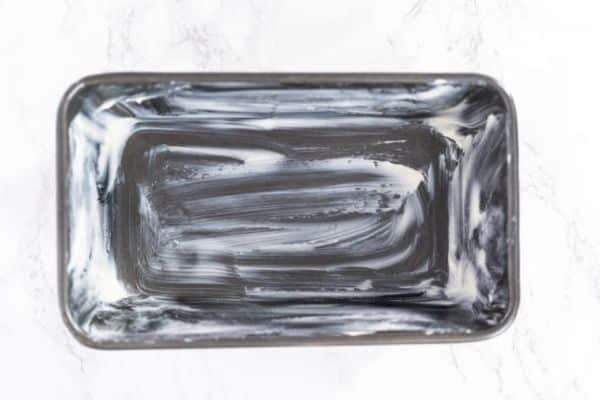
Light cleaning after every use helps prevent heavy grease buildup. Simple washing with warm water and soap keeps trays easier to maintain long term.
Deep cleaning with baking soda does not need to happen after every use. Once every few weeks is usually enough for regularly used trays.
Baking trays used for greasy foods may need more frequent deep cleaning. Burnt oils become harder to remove the longer they stay on the metal surface.
Regular cleaning also improves cooking results because old burnt grease can affect heat distribution during baking.
Tips To Keep Baking Trays Cleaner Longer
Using parchment paper is one of the easiest ways to protect baking trays from grease and burnt food. It creates a barrier between food and the tray surface.
Avoid overheating empty trays because extreme heat can discolor metal and warp thinner baking sheets. Proper temperature control helps trays last longer.
Cleaning trays soon after use also prevents grease from hardening. Fresh stains are always easier to remove than old baked-on residue.
Can Baking Soda Damage Baking Trays?
Baking soda is generally safe for most baking trays when used properly. It is much gentler than many commercial cleaners.
However, aggressive scrubbing with baking soda can still scratch delicate non-stick coatings. Gentle cleaning methods are always safer for coated trays.
Aluminum trays may sometimes become slightly dull after repeated deep cleaning, but this usually does not affect baking performance. Most people prefer slight discoloration over thick burnt grease buildup.
Testing a small hidden area first is a smart idea for expensive or specialty baking trays.
Conclusion
Learning how to clean a baking tray with baking soda is an easy and affordable way to remove grease, burnt food, and stains naturally. Baking soda works well because it breaks down grime without harsh chemicals or strong odors.
Regular cleaning helps baking trays last longer and improves cooking performance over time. Simple habits like soaking trays, using parchment paper, and avoiding rough scrubbing can keep trays looking much cleaner.
With the right method, even old baking trays can become easier to use again. Baking soda remains one of the safest and most effective kitchen cleaning solutions for everyday baking equipment.
