

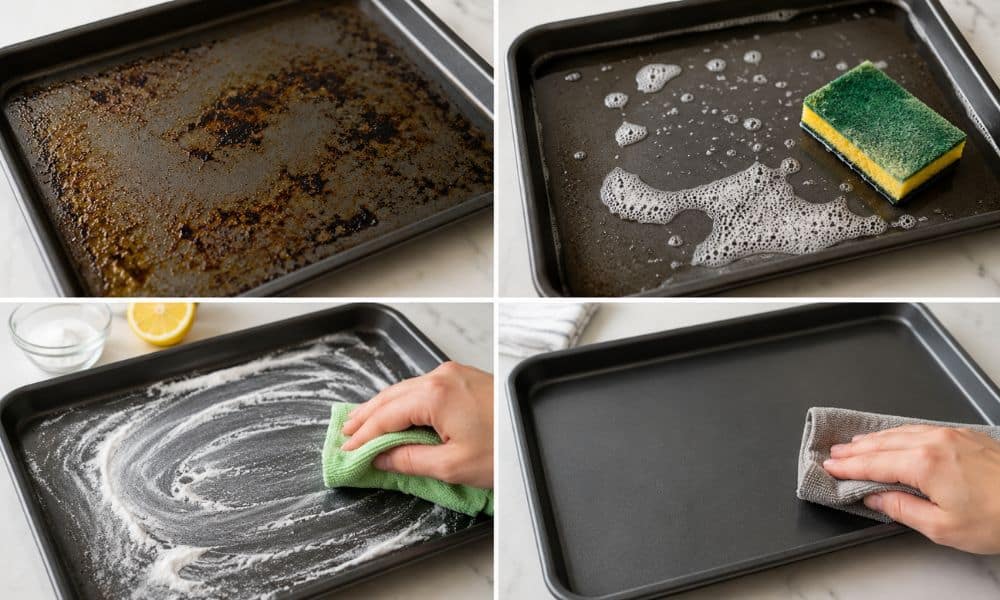
Knowing how to clean non stick baking trays properly helps keep the surface smooth, safe, and easy to use for everyday baking. Grease, burnt food, and sticky oil stains often build up after roasting vegetables, cookies, or sheet pan meals. Rough scrubbing and strong cleaners can damage the non-stick coating and make food stick even more later.
Gentle cleaning methods work much better for protecting the tray and extending its lifespan. Simple ingredients like baking soda, dish soap, vinegar, and warm water can remove grease without harming the coating. With the right cleaning routine, non-stick baking trays stay cleaner, last longer, and continue giving better baking results.
Why Non Stick Baking Trays Need Special Cleaning
Non-stick coatings are softer than stainless steel or aluminum trays. Strong scrubbing pads can scratch the surface quickly. Even small scratches may reduce the tray’s performance over time.
Burnt grease also sticks differently on non-stick coatings. Heavy oven heat creates a thin layer of baked oil that regular washing sometimes misses. Gentle deep cleaning helps remove this layer safely.
Proper cleaning also helps trays last longer. Many baking trays lose their non-stick surface because of rough cleaning instead of normal use.
Things To Avoid Before Cleaning Non Stick Baking Trays
Avoid Metal Scrubbers
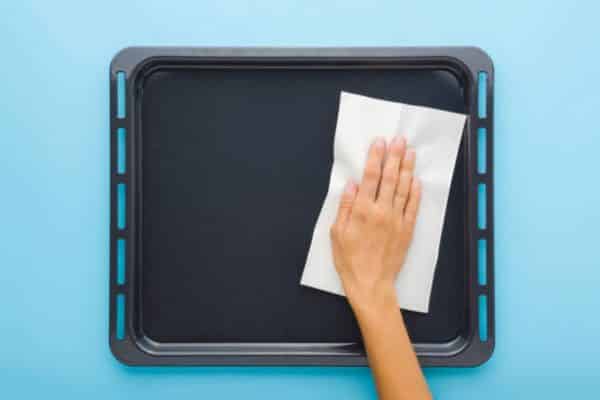
Steel wool and sharp cleaning tools scratch the coating almost immediately. Once the surface gets damaged, food starts sticking more often.
Soft sponges or microfiber cloths work much better for regular cleaning.
Do Not Use Harsh Oven Cleaner
Many oven cleaners contain strong chemicals that slowly weaken non-stick coatings. The tray may fade, peel, or become rough afterward.
Mild dish soap usually works better and keeps the coating protected.
Never Shock A Hot Tray With Cold Water
A hot tray placed under cold water may warp. Sudden temperature changes can bend the metal and shorten the tray’s life.
Allow the tray to cool naturally before washing.
Best Way To Clean Non Stick Baking Trays Daily

Step 1: Let The Tray Cool
Place the tray on the counter for a few minutes after baking. Cleaning while the tray is still hot may damage the coating.
Warm trays clean more easily than completely cold greasy trays, so moderate warmth works best.
Step 2: Soak In Warm Soapy Water
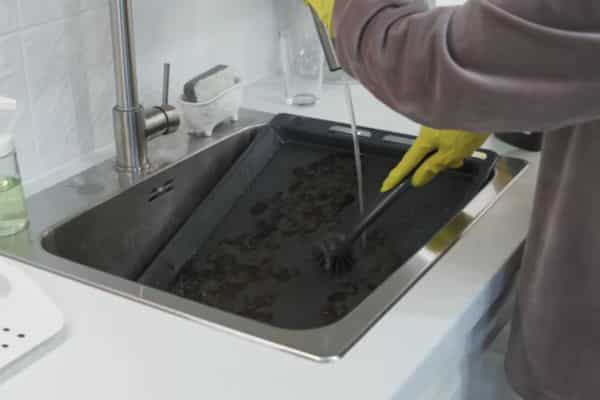
Fill the sink with warm water and a small amount of dish soap. Let the tray soak for about 15 to 20 minutes.
Soaking softens grease and loosens baked food naturally without heavy scrubbing.
Step 3: Wipe Gently
Use a soft sponge or microfiber cloth to wipe the tray. Circular motions help lift grease more evenly.
Most light stains disappear after soaking properly.
Step 4: Rinse And Dry
Rinse with warm water and dry immediately using a soft towel. Drying helps prevent water spots and keeps the tray looking cleaner.
How To Remove Burnt Grease From Non Stick Baking Trays
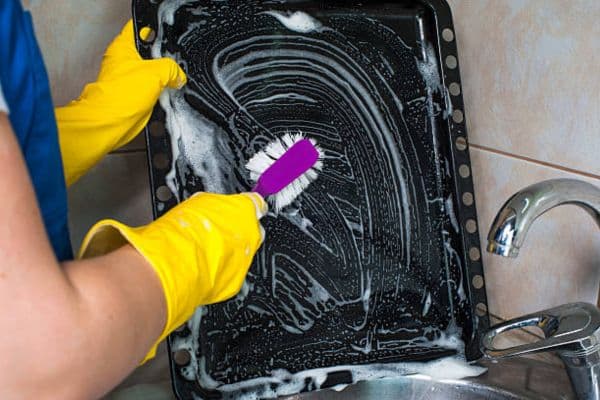
Burnt grease often builds around tray corners and edges. Gentle deep cleaning removes these stains safely.
Baking Soda Paste Method
Baking soda works well because it breaks down grease without scratching the coating.
What You Need
- Baking soda
- Warm water
- Soft sponge
Steps
Mix baking soda with a little water until it forms a thick paste. Spread the paste across greasy areas.
Leave it for about 30 minutes. Wipe gently with a soft sponge and rinse clean.
This method works especially well for cookie trays and roasting pans. Discover the pros and cons of Aluminium Vs Stainless Steel Baking Tray options for better baking results and easier cleaning.
Vinegar Steam Cleaning Method
Vinegar helps loosen baked grease naturally.
How To Use It
Add equal parts warm water and white vinegar to the tray. Place the tray in a warm oven for about 10 minutes at low heat.
The steam softens hardened grease and makes wiping easier afterward.
Wash normally with dish soap after the tray cools.
Lemon Cleaning Method For Sticky Residue
Lemon contains natural acids that help cut grease gently.
Cut a lemon in half and rub it across greasy spots. Leave the juice on the tray for 10 minutes before wiping clean.
This method also helps remove food odors from baking trays.
How To Clean Heavily Stained Non Stick Baking Trays
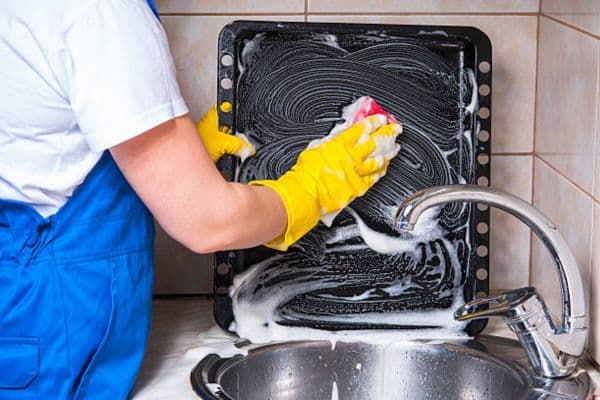
Some trays develop dark brown stains after months of baking. These stains often come from oils baking repeatedly onto the surface.
Deep Cleaning Method
Supplies
- Baking soda
- White vinegar
- Dish soap
- Soft cloth
Instructions
Sprinkle baking soda across the tray first. Add small amounts of vinegar slowly until fizzing begins.
Let the mixture sit for 20 minutes. Wipe gently using a soft cloth.
Repeat once more for stubborn grease buildup.
Can Non Stick Baking Trays Go In The Dishwasher?
Many brands label trays as dishwasher safe, but hand washing usually protects the coating longer.
Dishwasher detergent can slowly wear down non-stick layers. High dishwasher heat may also weaken the surface over time.
Hand washing remains the safest cleaning method for long-term use.
Common Mistakes That Damage Non Stick Baking Trays
Using Cooking Spray Too Often
Cooking sprays sometimes leave sticky residue that builds over time. This layer becomes difficult to clean later.
Parchment paper or light oil brushing works better for baking.
Stacking Trays Without Protection
Metal trays stacked directly together can scratch non-stick coatings.
Soft liners, kitchen towels, or parchment paper between trays help prevent damage.
Overheating The Tray
Very high heat slowly weakens non-stick coatings. Most trays perform best below extremely high broiling temperatures.
Repeated overheating often causes peeling or discoloration.
Natural Cleaning Solutions For Non Stick Baking Trays
Many people prefer natural cleaners instead of strong chemicals.
Baking Soda And Vinegar
This combination removes grease safely and works well for deep cleaning.
Lemon Juice
Lemon naturally cuts oil and leaves a fresh smell.
Dish Soap And Warm Water
Simple dish soap remains one of the safest daily cleaning methods for non-stick trays.
How Often Should Non Stick Baking Trays Be Deep Cleaned?
Light washing after every use helps prevent buildup. Deep cleaning once every few weeks usually keeps trays in good condition.
Heavy roasting trays may need more frequent cleaning because grease builds faster during high-heat cooking.
Regular maintenance prevents permanent staining later.
Signs A Non Stick Baking Tray Needs Replacement
Even careful cleaning cannot save trays forever.
Peeling Coating
Peeling surfaces usually mean the coating has worn out.
Deep Scratches
Large scratches reduce non-stick performance and make cleaning harder.
Warped Shape
Warped trays heat unevenly and may affect baking results.
Replacing heavily damaged trays often improves cooking consistency.
Tips To Keep Non Stick Baking Trays Cleaner Longer

Use Parchment Paper
Parchment paper catches grease before it reaches the tray surface.
Wipe Grease Quickly
Cleaning small grease spots early prevents baked-on stains later.
Avoid Metal Utensils
Silicone or wooden tools protect the coating during baking.
Dry Immediately After Washing
Dry trays resist staining and water marks better.
Best Cleaning Routine For Long Lasting Baking Trays
A simple routine usually works best:
- Allow the tray to cool
- Soak in warm soapy water
- Wipe gently with a soft sponge
- Use baking soda paste for stains
- Dry completely before storing
This routine helps preserve the non-stick coating and keeps trays cleaner for years.
Conclusion
Learning how to clean non stick baking trays properly helps protect the coating, improve baking performance, and extend the tray’s lifespan. Gentle cleaning methods work far better than harsh scrubbing or strong chemicals. Warm water, dish soap, baking soda, and vinegar usually remove most grease safely.
Regular cleaning also prevents stubborn stains from building over time. Small habits like using parchment paper, avoiding metal tools, and drying trays immediately make a big difference. Clean non-stick baking trays not only look better but also help food cook more evenly and release more easily during baking.
