

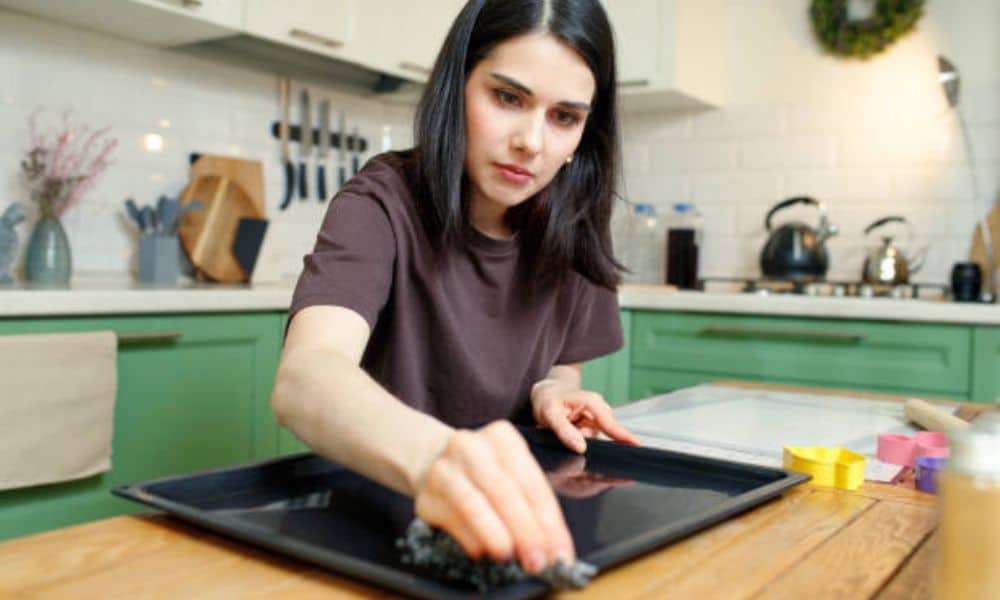
Baking trays go through a lot of heat, grease, and food spills. Over time, this can create a thick black layer known as carbon buildup. Many people think an old baking tray is ruined when they see these stubborn marks. The good news is that learning how to remove carbon buildup from baking tray surfaces is easier than most people expect. With the right cleaning methods, even heavily stained trays can look much cleaner and work better again.
What Is Carbon Buildup On A Baking Tray?
Carbon buildup is a layer of burned food residue, grease, and oil that hardens after repeated use. Every time a baking tray is heated, tiny amounts of food and grease can stick to the surface.
As these leftovers continue to bake at high temperatures, they become darker and harder. Eventually, they turn into a black or brown crust that is difficult to remove with normal dish soap.
Carbon buildup is common on aluminum baking trays, stainless steel trays, and even non-stick baking sheets.
Why Should You Remove Carbon Buildup?
Many people continue using baking trays with carbon buildup because they believe it is harmless. While it may not always be dangerous, it can create several problems.
The tray may heat unevenly. Food can stick more easily. Old grease can produce unpleasant smells during baking.
Heavy carbon buildup can also make baking trays look dirty and neglected. Removing the buildup helps maintain better cooking performance and extends the life of the tray.
Signs Your Baking Tray Has Carbon Buildup
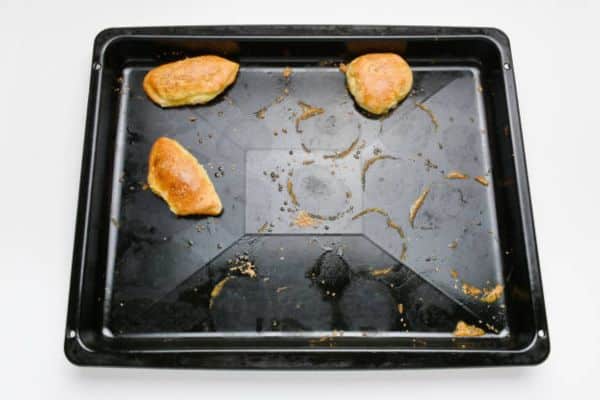
Carbon buildup is usually easy to spot.
Look for these common signs:
- Black crusty patches
- Dark brown stains that will not wash off
- Sticky burnt residue
- Uneven tray color
- Smoke during baking
- Burnt smells from the oven
If your tray shows these signs, it is probably time for a deep cleaning.
How To Remove Carbon Buildup From Baking Tray With Baking Soda
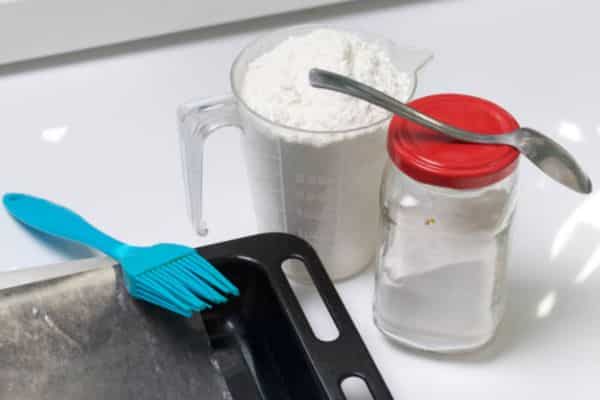
One of the safest and most effective methods uses baking soda.
Start by placing the baking tray in a sink or large tub. Sprinkle a generous layer of baking soda over the entire surface.
Add enough warm water to create a thick paste. Spread the paste evenly across the carbon buildup.
Leave the tray for several hours or overnight.
After soaking, use a non-abrasive scrubber to remove the loosened residue. Most of the buildup should come off with moderate scrubbing.
Rinse thoroughly and wash with dish soap.
This method works especially well for light to moderate carbon buildup.
Use Vinegar And Baking Soda Together
For tougher stains, vinegar can increase the cleaning power.
Cover the tray with baking soda and then spray white vinegar over the surface. A fizzing reaction will begin immediately.
This reaction helps loosen hardened carbon deposits.
Allow the mixture to sit for about 30 minutes before scrubbing.
Use warm water and a sponge to remove the remaining residue.
Many homeowners find this method effective because it uses inexpensive ingredients already found in most kitchens.
Soak The Tray In Hot Water
Sometimes the simplest solution works surprisingly well.
Fill a sink with very hot water and add a few drops of grease-cutting dish soap.
Place the baking tray in the water and allow it to soak for several hours.
The heat softens old grease while the soap breaks down oily residue.
After soaking, scrub the tray with a sponge or nylon brush.
This method may not remove heavy carbon buildup completely, but it helps loosen stubborn layers before using stronger cleaning techniques.
Remove Carbon Buildup With Hydrogen Peroxide

Hydrogen peroxide is another popular cleaning option.
Cover the tray with baking soda first.
Next, pour hydrogen peroxide over the baking soda until a paste forms.
Let the mixture sit overnight.
The combination helps break down burnt grease and carbonized food particles.
The following day, scrub the tray and rinse thoroughly.
Many people use this method when baking soda alone is not enough.
Try A Commercial Baking Tray Cleaner
Some carbon buildup becomes extremely difficult to remove with household ingredients.
In these situations, commercial oven cleaners or baking tray cleaners may help.
Always read product instructions carefully before use.
Wear gloves and ensure good ventilation during cleaning.
Apply the cleaner according to the manufacturer’s directions and allow it to work for the recommended time.
Afterward, scrub and rinse thoroughly.
Commercial cleaners are often very effective but should be used carefully.
Can You Use Steel Wool?
Steel wool can remove stubborn carbon buildup, but it is not suitable for every baking tray.
Aluminum trays may become scratched.
Non-stick trays can lose their protective coating.
Stainless steel trays usually tolerate steel wool better, although minor scratches may still occur.
When possible, start with gentler cleaning methods before using abrasive tools.
Cleaning Non-Stick Baking Trays
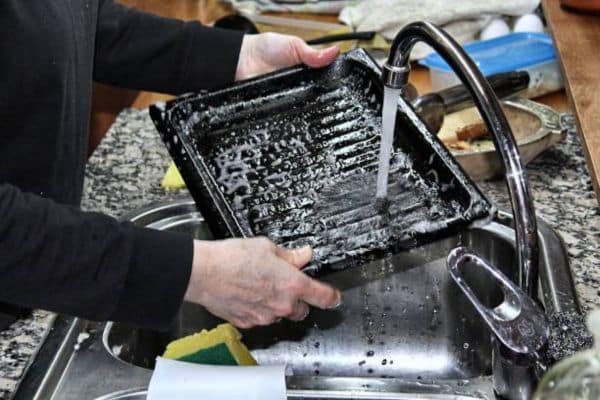
Non-stick baking trays require extra care.
Avoid steel wool, metal scrapers, and harsh chemicals whenever possible.
Use baking soda paste and soft sponges instead.
Gentle cleaning protects the coating and helps extend the tray’s lifespan.
Damaged non-stick surfaces can cause food to stick and reduce baking performance.
How Long Does Carbon Buildup Take To Remove?
The answer depends on how severe the buildup is.
Light stains may disappear after one cleaning session.
Moderate buildup often requires overnight soaking.
Heavy carbon deposits may need several cleaning attempts over multiple days.
Patience is important. Rushing the process can damage the tray surface.
Common Cleaning Mistakes To Avoid
Many people accidentally make carbon buildup worse.
One common mistake is using sharp metal tools to scrape the tray.
Another mistake is cleaning immediately after removing the tray from a hot oven.
Extreme temperature changes can warp some baking trays.
Using bleach directly on food-contact surfaces is another poor choice unless the product specifically recommends it.
Always rinse trays thoroughly after any cleaning treatment.
How To Prevent Carbon Buildup In The Future
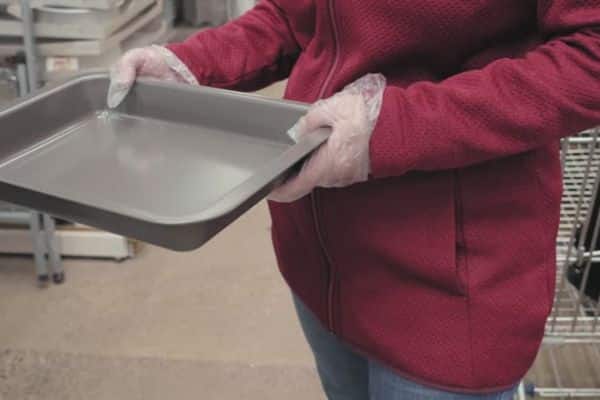
Prevention is easier than deep cleaning.
Line baking trays with parchment paper whenever possible.
Remove food residue soon after baking.
Wash trays regularly instead of allowing grease to accumulate.
Avoid overheating oils that can leave stubborn burnt deposits.
Regular maintenance prevents carbon buildup from becoming a major problem.
When Should You Replace A Baking Tray?
Most baking trays can last for years with proper care.
However, replacement may be necessary if the tray becomes badly warped, heavily rusted, or damaged beyond cleaning.
A tray with peeling non-stick coating should also be replaced.
If the tray still heats evenly and cleans up reasonably well, it can usually continue serving its purpose.
Natural Cleaning Vs Commercial Cleaners
Natural cleaners are safer for most households.
Baking soda, vinegar, dish soap, and hydrogen peroxide are affordable and widely available.
Commercial cleaners generally work faster and require less scrubbing.
However, they often contain stronger chemicals that require careful handling.
Many homeowners prefer starting with natural methods and only using commercial cleaners when necessary.
Final Thoughts
Knowing how to remove carbon buildup from baking tray surfaces can help restore old baking equipment and improve cooking results. Carbon buildup develops from years of baked-on grease, oil, and food residue, but it does not mean the tray is ruined.
Simple solutions like baking soda, vinegar, hot water soaking, and hydrogen peroxide often remove stubborn buildup effectively. Regular cleaning and proper maintenance can prevent future carbon deposits and keep baking trays in excellent condition for years.
